Tuesday, April 23, 2019

No More Draining The Swamp


Hello Everyone:

Yours Truly is having an exquisite day.  Yes, Blogger is having one of those days where everything is falling her way.  To celebrate this all-to-rare occasion, Blogger treated herself to a delicious hot coffee beverage.  Feeling absolutely energized, shall we drain that swamp?

Image result for Washington DC under construction
The Capitol Building under construction
Washington D.C.
pinterest.com

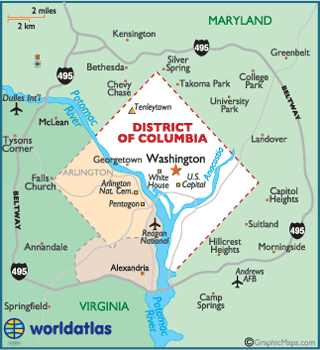
"Drain the swamp" is more than just a political battle cry.  Washington D.C. was literally a swamp until a group of planners, engineers, and builders took it upon themselves to create a proper capital for the newborn nation, situated between Maryland and Virginia.  The word swamp brings to mind the image of a foul smelling mosquito infested landscape.  Not exactly the place the founders of the United States had in mind when they envisioned "a shining city on the hill."  They had a more noble location in mind not someplace that would foster rotten politics.  As it turned out, the Founding Fathers were wrong in assuming that a rotten environment will foster rotten politics, even under present circumstances.  Maybe the next time someone shouts "drain the swamp" at a rally, you can tell them, done and here is how.

Image result for Washington DC: map
Map of Washington D.C.
worldatlas.com
 
George Washington knew precisely what he was doing when chaired a three-member commission, authorized by Congress, to choose a site for the U.S. capital.  There was never a question that the federal district and city had to be close to the navigable water of the Potomac River, away from the marshy Chesapeake Bay, near the bustling port city of Georgetown.  President Washington was familiar with the site because it resembled his home in Mount Vernon--"a rolling riverside terrain of old tobacco fields" (savingplaces.org; Apr. 10, 2019; date accessed Apr. 22, 2019)

Locating a city near a navigable water source was typical of how many early American cities like Philadelphia and Cincinnati were settle.  Washington was no exception, "built on a firm and dry riverbank" (theconversation.com; date accessed Apr. 23, 2019).  The site "steadily sloped upward away from the Potomac between Rock Creek and the Anacostia River, then called the Eastern Branch of the Potomac" (Ibid).  The northward direction of the land was immediately apparent to Pierre L'Enfant (nps.gov; date accessed Apr. 23, 2019), the French immigrant commissioned to lay out the streets and squares for the city.  Fortuitously, he selected one high point for the presidential mansion and another for both houses of Congress.  This became Capitol Hill, formerly Jenkins Hill.

Image result for tiber creek dc
Tiber Creek
Washington D.C.
whitehousehistory.org

The Tiber Creek was a very lovely waterway, coursing gently southward between the White House and the Capitol, along the future location of Union Station Plaza before turning west toward present day Constitution Avenue.  The western portion of the creek was re-directed toward the Washington City Canal in 1815.  By the 1840s the canal was that foul infested landscape the founding fathers imagined the federal district to be because of inadequate drainage.

Image result for early washington dc maps: 1826
Early map of Washington D.C.
loc.gov
 Nevertheless, charming panorama pictures were widely distributed during the 19th century as a way to instill a sense of national pride.  These images of early Washington are one of the best ways for getting a sense of what the city looked liked before the swamps were drained.  The Library of Congress (loc.gov) has a collection of these pictorials, among which depict a dry landscape incapable of supporting the buildings that stand on it today.  For example, the Smithsonian Castle has been standing straight since the mid-19th century.

Early maps support this conclusion.  In 1826 Anne Royall, perhaps the first female journalist in the U.S. and author of Sketches of History, Life and Manners, in the United States (books.google.com; date accessed Apr. 23, 2019), described

...the elevate site of the city; its undulating surface, covered with very handsome buildings....

She inventoried the city without a single reference to swamps, concluding with wee too much zeal,

...it is not in the power of the imagination to conceive a scene so replete with every species of beauty...(Ibid)

British visitors from the period would poke fun at the new city, especially the manners and pretensions of its residents, not the landscape.  In 1830 Frances Trollope (gutenberg.org; date accessed Apr. 23, 2019) wrote,

I was delighted with the whole aspect of Washington, light, cheerful, and airy; it reminded me of our fashionable watering-places... (theconversation.com; date accessed Apr. 23, 2019).

The muddiest period of Washington's development came in the post-Civil War era.  Decades of farming along the hinterlands of the Potomac led to erosion, sending slit downriver.  As the River's rapids slowed as flowed toward the city, the slit became giant mudflats on the city side of the Potomac.

Image result for The Tidal Basin
The Tidal Basin
Washington D.C.
nps.gov

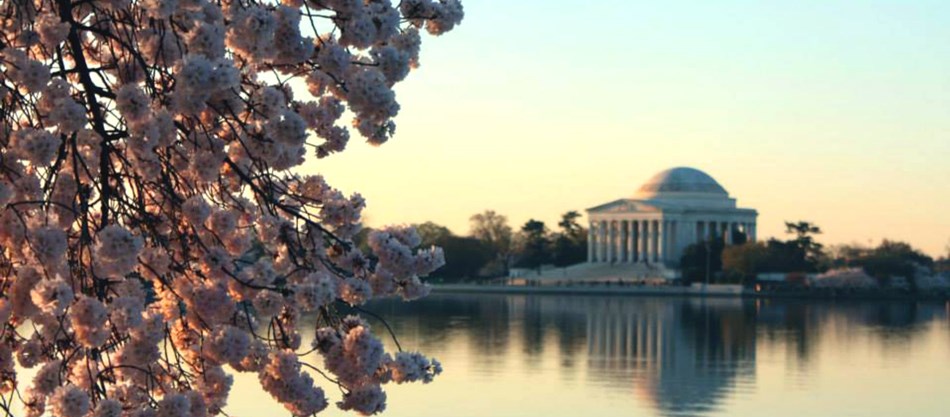
In the late 19th century, the Army Corp of Engineers began to reconfigure the flats into the Reflecting Pool, and Tidal Basin, and acres of park land.  By the way since Yours Truly has your attention, our friends at the National Trust for Historic Preservation have begun a three-year campaign to save the Tidal Basin and they need your help.  Please go to savingplaces.org and sign the pledge, thanks.  The park areas are home to presidential memorial and cherry blossom trees, creating a park that one would hardly describe as a "swamp."

President George Washington envisioned the new capital as metropolis with commerce and cultural eclipsing Philadelphia.  The Erie Canal helped grow New York, putting a dent in President Washington's vision.  The rapid growth of Baltimore also made Washington an also-ran in Mid-Atlantic trade.  English commentator James Bryce wrote in the The American Commonwealth (oll.libertyfund.org; date accessed Apr. 23, 2019) that "the United States was the only great country without a true capital, but that was a dig at New York as much as at Washington" (theconversation.com; date accessed Apr. 23, 2019)

Blogger has a suggestion for all the politicians who shout "drain the swamp," enough already.  The swamp has been drained, get out of your offices and take a walk around the city.  Washington D.C. is filled with many neighborhoods, each with their own distinct character.  Who knows you might just learn something about that swamp you want to drain.


Monday, April 22, 2019

Blogger Candidate Forum: Redacted, The Analysis


Hello Everyone:

It is a sunny Monday afternoon, Yours Truly is feeling better, and it is the start of a new week.  Today, Blogger Candidate Forum is stepping into the blogosphere with the, as promised, look at the newly released redacted final report by the Special Counsel Office on Russian interference in the 2016 elections.  If The Candidate Forum were to describe the SCO's report in a few words it would be no one is unscathed.  Even former President Barack Obama is faulted for not heeding the warnings from his intelligence directors, in 2014, about possible Russian meddling in the elections.  The House of Representatives Judiciary Committee subpoenaed the unredacted version of the report, arguing that the committee has a right to see the full version.  The Department of Justice responded that the subpoena was premature and unnecessary (bbc.com; Apr. 20, 2019; date accessed Apr. 22, 2019).  That said, shall we have a look at the Special Counsel Office's final report and try to make some sense of it?

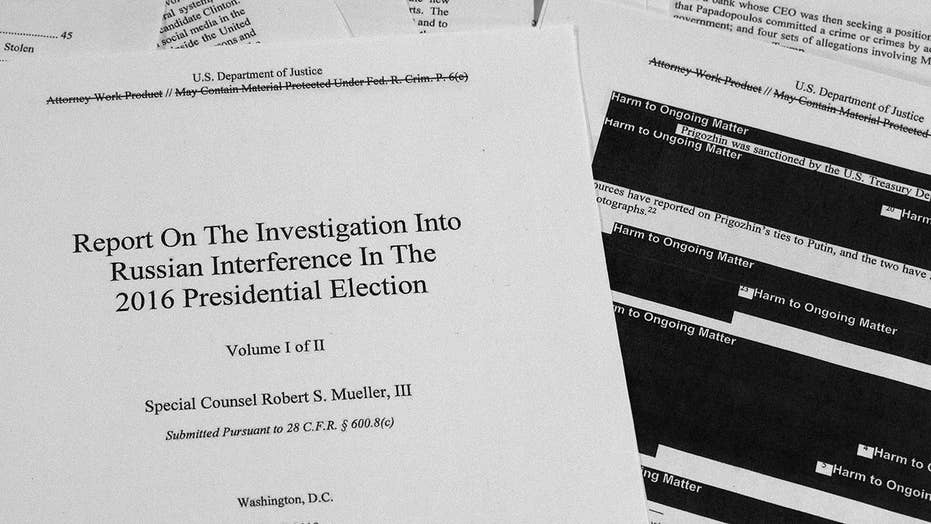
Image result for special counsel report
Title page from the SCO's report
foxnews.com
   How bad does the SCO's report make the Trump administration look?  Really bad.  The report paints a very unflattering picture of the President of the United States' dishonesty with the American public on Russia and the entire Russian investigation.  Let that sink in for a minute.  One of the character traits we invest in a head of government is honesty.  We have a right to demand honesty from our heads of governments.  The SCO's report presents a picture of a president who failed to do that.  Yes, you can make the case that no municipal, state, or federal lawmaker is totally honest, no such person exists.  However we the people who voted for Mr. Donald Trump to be our representative have a right to a certain expectation of honesty about something that compromised our elections and threatened national security.  Let us break this down.

Image result for special counsel report
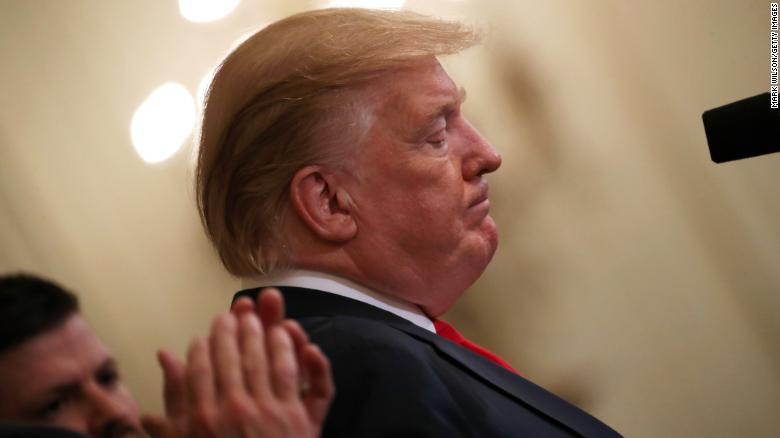
The President of the United States
cnn.com
During and after the 2016 campaign cycle, the president raised doubts that Russia interfered with the elections.  Then candidate-Trump reacted to the news of Russian interference by issuing this state:

We believe it was the DNC that did the 'hacking' as a way to distrct from the many issues facing their deeply flawed candidate and failed party leader,  Too bad the DNC doesn't hack Hillary Clinton's 33,000 missing emails (cnn.com; June 15, 2016; date accessed Apr. 22, 2019)

The Democratic National Committee, the Chinese, a random 400-person, whoever or whatever else was behind election interference other than the Russians.

Image result for special counsel report
Special Counsel Robert S. Mueller
cnbc.com

However, Special Counsel Robert Mueller wrote,

[T]he investigation established that the Russian government perceived it would be benefit from a Trump presidency and worked to secure that outcome, and that the campaign expected it would benefit electorally from information stolen and released through Russian efforts (nbcnews.com; Apr. 22, 2019)

The operative word in this statement is "perceived."  At the time of the infamous Trump Tower meeting, Mr. Trump's victory was not a sure thing.  The Russian government expected some quid pro quo arrangement.  The possible arrangement being a lifting of sanctions that have crippled the Russian economy. Thus, it assumed that by providing hacked DNC and Clinton campaign emails, it would ultimately result in a Trump victory and the lifting of sanctions.

Yesterday, the president's personal lawyer, former U.S. attorney and New York City Mayor Rudy Giuliani, told Meet the Press host Chuck Todd:

Todd: So it is now okay for political campaigns to work with material stolen by foreign adversaries?

Giuliani: It depends on the stolen material.  If the stolen material is--first of all, was it all right for The New York Times and The Washington Post to print against the objections of the president... (Ibid)f

In his typically clumsy manner Mr. Giuliani tried to normalize foreign election interference.  On WikiLeaks, Mr. Giuliani added,

They were putting out things that were true and very, very damaging to Hillary Clinton...It'd be like the Pentagon Papers.  I mean, Pentagon Papers were stolen.  They were stolen form the, from the, from the Department of Defense  (Ibid)

One reason Mr. Giuliani is equating the Pentagon Papers with WikiLeaks is Roger Stone's trial is coming up and the WikiLeaks story is not going away.  By the way, Rudy Giuliani might want to re-check his copy of state and federal privacy statues because you can be prosecuted for using hacked social media and email accounts (hg.org; date accessed Apr. 22, 2019).

Image result for trump tower meeting august 2016
Trump Tower
New York City, New York
nytimes.com
The president repeatedly declared that he had no business connections with Russia.  In a tweet (of course) dated nine days before his inauguration, Mr. Trump petulantly insisted,

Russia has never tried to use leverage over me.  I HAVE NOTHING TO DO WITH RUSSIA-NO DEALS, NO LOANS, NO NOTHING (twitter.com/@realDonaldTrump; Jan. 11, 2017; date accessed Apr. 22, 2019)

The Special Counsel Office's paints a different picture.  Robert Mueller wrote,

Between 2013 and June 2016, several employees of the Trump Organization, including then-president of the organization Donald J. Trump, pursued a Moscow deal with several counterparties (nbcnews.com; Apr. 22, 2019)

One of the most explosive revelation from the Special Counsel was the president's repeated attempts to impede with the Russia investigation by tampering with witnesses.

Image result for James Comey
Former FBI Director James B. Comey
northjersey.com

Mr. Trump and his team also said that FBI Director James Comey was dismissed because of his handling of the Clinton email investigation.  The men and women in the Trump administration, including Director Comey, serve at the pleasure of the president.  However, the timing and reason for Director Comey's firing was cause for suspicion.  The dismissal came just before the Department of Justice issued its final determination.  

During a May 10, 2017 briefing, Press Secretary Sarah Huckabee Sanders told reporters that the ...rank and file of the FBI had lost confidence in their director...countless members of the FBI that say very different things (politifact.com; Apr. 19, 2019; date accessed Apr. 22, 2019).  However, Ms. Sanders later told SCO investigators that she had a slip of the tongue (Ibid).  Ms. Sanders told the SCO that her comment was made in the heat of the moment that was founded on anything (Ibid)  Essentially, the president was angry that the FBI's investigation into the Clinton emails did not result in arrests and refused to back off the Flynn investigation.  Further, the president tried to get former White Legal Counsel Douglas McGahn to misrepresent James Comey's dismissal but Mr. McGahn refused to go along with the ruse and eventually resigned.


Image result for Douglas McGahn
Former White House Legal Cousel Douglas McGahn
cbsnews.com

Former White House Legal Counsel Douglas McGahn emerged as a sort of guardrail against the president's own worst impulses.  When Robert Mueller was appointed as the Special Counsel, the president was visibly shaken.  Once he regained his composure, the president initiated efforts to impede the investigation, including telling Mr. McGahn and former Deputy Attorney General Rod Rosenstein that Mueller had to go.  Mr. McGahn spoke with the president twice and clearly understood what the directive meant.  Rather than carry it out, he phoned his lawyer, typed his resignation letter, and drove to the White House to clean out his office.  Ultimately, he remained on the job and the president did not follow up on his request.  Mr. McGahn did finally leave his job without carrying out the president's order that would have absolutely caused a constitutional crisis.

Where does that leave us?  The House of Representatives Judiciary Committee subpoenaed the full, unredacted report for review.  Members of the House are using the I-word (impeachment) loudly.  Allow Yours Truly to remind you that impeachment is not removal from office.  Impeachment is the equivalent of indictment.  Most important, it is a political process as much as it is a legal one.  Further, this is not the 1990s and former President Bill Clinton is not in anyone's cross hairs.  The Special Counsel Office's report lays bare ten occasions where the president tried to muddy the investigation into Russian inference in the 2016 election.  It also paints a portrait of an administration that functions in a toxic environment.  Leadership and good governance flows from the top; what does it say when we have a duly elected president who tried obstruction an ongoing investigation?  If the House refuses to begin impeachment hearings, then they must censure the president.  The point being that the president must face consequences for his actions.  Allowing the president to go without rebuke is cowardness.     

Thursday, April 18, 2019

Blogger Candidate Forum: Redacted


Hello Everyone:

This is Blogger Candidate Forum and the word of the day is redacted. The redacted version of the Special Counsel’s final report on Russian interference in the 2016 elections is public. Here is what we know so far: While there is no evidence of collusion between the Trump campaign and Russian agents, there was not enough evidence to prosecute the president for obstruction of justice in federal court. However, it may lay the groundwork for impeachment proceedings in the House of Representatives.  What we also know is that a third of the 448-page report has at least one redacted word. Redactions are not necessarily a bad thing, in this case, because preserves the confidentiality of grand jury testimony, pertains to ongoing investigations, and matters of national security. Nevertheless, there is something that smells odd about the redactions.  Perhaps if the Justice Department released the entire, unredecated version of the SCO’s report, that odd smell would clear up. The Candidate Forum is entirely sure what that odd smell is but will follow the story and see where it leads. There will be more on Monday, once The Candidate Forum has had a chance to digest some of the information and get over a recurring case of sinusitis.

Tuesday, April 16, 2019

Houses Of Worship


Hello Everyone:

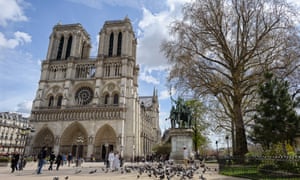
Good Tuesday afternoon, this is Yours Truly coming to you on a rather gray day in the blogosphere.  This has been a fascinating 24 hours, following the fire at Notre Dame Cathedral in Paris, France.  Blogger is particularly interested in the a conversation thread that has evolved in the aftermath of the blaze: the role of houses of worship in contemporary society. 

Image result for notre dame paris
Notre Dame Cathedral
Paris, France
theguardian.com
Without a doubt, the local church, mosque, synagogue, temple, and shrine have historically served as the communal center for millennia.  In one respect, cathedrals are no different.  In medieval society, the cathedrals were the most obvious sign of the Catholic Church's wealth.  They were typically built in major cities like Paris but were paid for by the people, through tithes (historylearning.co.uk; date accessed Apr. 16, 2019).  They are reflections of faith and outlets for creative energy.  Typically, cathedral building was driven by the church or religious and the actual work was community effort.  The builders and artisans would be granted indulgences (forgiveness for any past, present, or future sins) as part of their compensation for their work in creating the Lord's house.  A better option than going on long, arduous crusade.

There was a group of pious that objected to the excessive spending on the construction and decorative program of these lavish buildings but they were in the minority.  The dominant sentiment was great energy, ambition, and a real desire to create the greatest monument to God's glory (durhamworldheritagesite.com; date accessed Apr. 16, 2019).  What about your local house of worship?  Do religious communities need a physical space to flourish?

Image result for old friendship baptist church
Old Friendship Baptist Church
Washington D.C.
savingplaces.org

The non-profit Sacred Spaces Conservancy (sacredspacesdc.org; date accessed Apr. 16, 2019) and researchers believe that houses of worship  have ample spiritual and communal value, which makes their decline or destruction cause for alarm.  Sacred Spaces reached the economic impact houses of worship on a local community, in this case, Washington D.C.  While comprehensive in scope, the research does not engage or include how Americans define "sacred space," including people who considered meditation and volunteering as acts of faith and good works, even if it does not take place in a physical place (washingtonpost.com; Nov. 23, 2018; date access Apr. 16, 2019).

Noreen Bryant, the spokesperson for the National Community Church, told the Washington Post, "Evangelical Christians,"

see that part of who we believe Jesus is was incarnate, so he came and moved into the neighborhood,  You don't need a [church] building to do that,...(Ibid)

In short, the modern day answer is no, a physical space is not necessary to perform acts of faith and good works.  If a physical building is not necessary, than what about religious symbols?   

Image result for french synagogues
Grand Synagogue
Paris, France
sandiegofreepress.org

In the United States, you can walk down any street and see people wearing all sorts of religious attire as a form of outward expression of devotion.  France frowns on visible religious symbols.  On March 3, 2004, the French Senate approved a bill prohibiting the wearing of conspicuous religious symbols in public schools (brookings.edu; Mar. 1, 2004; date accessed Apr. 16, 2019).  The law is a narrowly defined reassertion of religious neutrality within French public schools (Ibid).  The law was roundly condemned in the United States because it is common to see American school children walking the halls with crosses, head scarves, and kippot (Jewish skull caps).  The ban on visible religious symbols in French schools is a manifestation of French views of religious freedom.

French and Americans hold opposite opinions on what constitutes religious freedom.  One way to understand this divergence of views are two bills that were approved by the U.S. Congress and the French government in 1998 with opposite goals.  The United States passed the International Religious Freedom Act, which imposes sanctions on countries that were convicted of violating religious freedom.  Coincidentally the very next day the National Assembly recommended the creation of a government task force, the Inter-Ministerial Missions against Sects, to monitor dangerous cults (Ibid;  July 1, 2001).  Paradoxically, both countries embrace religious freedom, embedding it in their respective constitutional documents.  Neither country recognizes nor subsidizes an official religion, however Catholicism is still the primary religion in France along with Islam, Protestantism and Judaism (Ibid),  Herein lies the problem, if France is a nominally secular country, why has there been such an outpouring of emotion in the 24 hours since the fire at Notre Dame?

Perhaps the best answer to that question comes from historic preservation.  One of the reasons historic preservationists do what they do is that buildings are testament of a moment in history and a record of a civilization at that particular moment.  Notre Dame is symbolic of Christianity in France, built at time when the Catholicism was the center of everyday existence.   The cathedrals and churches were the center of daily communal life.  It was a difficult relationship, bishops and cardinals lived like aristocracy while the average person had scratch a meager existence.  Over time, Notre Dame became an integral part of France's historic-cultural life.  Even if you were a lapsed Catholic or not Catholic, you understood the significance of the Cathedral as the epicenter of Christian France.

Blogger would be remiss in not addressing some of the comments, on the social media, regarding the destruction of black churches and mosques.  Last week three churches and a mosque were burnt to the ground.  These houses of worship matter as much as the bold faced places because they are important to the life and history of their communities.  Black churches and mosques serve as places of regular worship and platforms for social justice.  Their loss is mourned in the shadows of the loss of more bold faced places.  We should not forget them.  We should not forget all the synagogues, Protestant churches, and mosques destroyed by the Catholic Church in the name of heresy.

As firefighter put out the smoking embers and investigate the cause of the Notre Dame fire, perhaps it can finally motivate people to honestly discuss the role of religion in contemporary society. 

Monday, April 15, 2019

In The Shadow Of A Border Wall

Hello Everyone:


Good afternoon and welcome to a new week on The Blog.  Tragedy has struck at the very heart of Paris.  Notre Dame Cathedral has been completely engulfed by flames.  The 850-year-old Gothic cathedral, the setting for Victor Hugo's novel The Hunchback of Notre Dame, is the most visited place in the City of Lights and one of the most stunning works of architecture.  The Paris fire brigade is tirelessly working to put out the blaze that already caused the collapse of the wood frame.  No one knows what exactly started the fire.  Right now, the only thing anyone can do is hope for the safety of the firefighters, not send water dropping tankers.  Onward.

Image result for berlin wall 1970s
The Berlin Wall, April 18, 1967
rarehistoricalphotos.com

Do walls affect the way we think?  By that Blogger means do walls traumatize the people they are meant to keep in or keep out?  Consider the 1962 case of an East German woman who suffered locked jaw in a psychiatric clinic in Leipzig.  Weeks before, she has an infected wisdom tooth removed; as routine as this may sound, the doctors were baffled about her condition.  They described her condition as "despondent and excitable" (newyorker.com; Mar. 28, 2019; date accessed Apr. 9, 2019).  A short time later, the woman became suicidal.

In the late sixties, German psychiatrist Dietfried Muller-Hegemann noticed an uptick in similar inexplicable cases such as dentist waiting on the shores of the Baltic Sea for a boat to take him to China; a civil servant who claimed that he was being spied upon; and a seamstress thought lesbians were following her (Ibid).  These and other cases had one thing in common, all of the patients lived close to the Berlin Wall.  In his 1973 book, Dr. Muller-Hegemann gave this strange phenomena a name: Mauerkrankheit--wall disease (Ibid).

Why are we talking about the way walls impact the way we think?  The reason why we are talking about the way walls impact the way we think is despite the fact the Berlin Wall came down in 1989, inspiring hope for more fluid border, the fact is barrier construction never stopped.  If anything, barrier construction has increased.  For example, India laid 1700 miles of barbed wire between it and Bangaldesh; five layers of fence stretches across 600 miles of border between Saudi Arabia and Iraq. "Anti-immigration barriers mark the borders of Bulgaria and Turkey, South Africa and Mozambique, Hungary and Croatia, and the United States and Mexico" (Ibid).  Their construction has spawned a field of research dedicated to studying their impact.  Insights by economists, psychologists, geographers, and other specialists are regularly published in the Journal of Borderland Studies (tandfonline.com).  Jessica Wapner writes, "...much of their research suggests that border walls may be affecting the people who live near them in unforeseen ways" (newyorker.com; Mar. 28, 2019).

A few years ago, Aideen Maguire, an epidemiologist at Queen's University in Belfast, North Ireland, wondered whether the peace lines--the barriers that separated Roman Catholics and Protestants during the Troubles--might be a factor in the country's plethora of mental health issues.  Ms. Wapner notes, "According [mentalhealth.org.uk; date accessed Apr. 9, 2019] to the Mental Health Foundation, a U.K. charity organization, Northern Ireland is reported to have a 25% higher overall prevalence of mental health problems than England" (newyorker.com; Mar. 28, 2019).  Dr. Maguire compared the locations of the peace lines to the health records of a million citizens.  She concluded that people living near barrier were 19 percent more likely to be on antidepressants and 39 percent more likely to take anti-anxiety medication (Ibid).  "Even those who grew up after the conflict was resolved experienced these effects" (Ibid).  In an article published in the 2016 issue of Journal of Epidemiology and Community Health (jech.bmj.com), Dr. Maguire and her co-authors wrote, Living in an area segregated by a 'peaceline is detrimental to mental health.
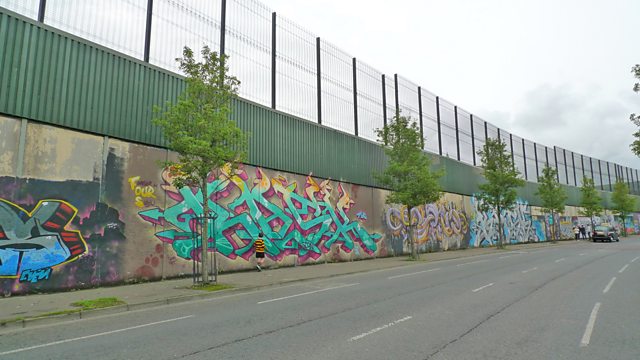
Image result for peacelines belfast
Along the peacelines
Belfast, Northern Ireland
bbc.co.uk
                                                         Since correlation does not equal causation; Dr. Maguire's data does not prove that barriers cause anxiety.  However, her ongoing research, examining more data from psychiatric hospital admissions and deaths by suicide yield similar association.  Dr. Aideen Maguire told The New Yorker,

Everything would suggest that they're not any different from the reset of the study population,..., except for the fact that they have a wall at the end of their street (newyorker.com; Mar. 28, 2019)

In the sixties, Dr, Muller-Hegemann "wrote as though the physical presence of the Berlin Wall were itself the cause of wall disease" (Ibid).  However, most contemporary psychologists who devote their time to border studies see an abstract relationship between the barriers and mental health.  Cornell University sociologist Christine Leuenberger told The New Yorker "that barriers are best thought of as a part of a 'wall-system'" (Ibid).  The wall-system includes physical landmarks such as no-go zones, checkpoints, and ripple effects like job loss and the breakdown of social networks.

Ms. Leuenberger recalled meeting with a Palestinian man in Bethlehem, near the West Bank barrier.  The gentleman worked as a nurse in Jerusalem but could no longer travel to the Israeli side for work and resorted to selling soda by the roadside.  Before the barrier went up, Israelis and Palestinians freely traveled between the Green Line for shopping and work.  An effort to create a border market stopped when the barrier went up.  "In this straightforward sense, walls can cut people off from sources of stability and happiness...." (Ibid)

Image result for border checkpoint
U.S.-Mexico border checkpoint
San Ysidro, California
kpbs.org
Experiences at checkpoints can be stress inducing: checkpoint interrogations.  Ms. Leuenberber writes that these stops can lead to feelings of humiliation, demoralization, denial, anger, or aggression (Ibid).  Yet, these aggregate effects are quite subtle.

  Returning to Northern Ireland, the Troubles are long over and lawmakers are considering removing the peace lines. Strangely, public sentiment is not completely behind the proposal: "a 2012 survey of eight hundred and forty people who live near them found that only forty-four per cent agreed with statement, I would like things left the way they are now" (Ibid).  Aideen Maguire grew up outside of Belfast and believes "that the peace lines have become both a source of fear and 'a security blanket' to assuage it" (Ibid).  The continued presence of brick existence of brick walls and concrete barriers, invading domestic spaces reinforces the notion of "the other"--Protestant versus Catholic--keeping the fear alive.
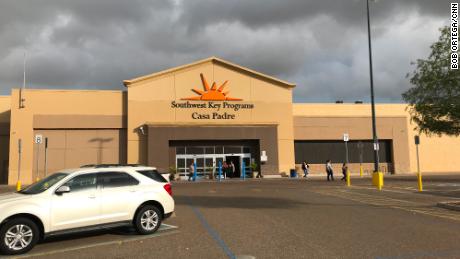
Image result for Child detention center: Brownsville, Texas Walmart
Southwest Key Program child detention center
Brownsville, Texas
cnn.com
                                                                                                                              University of Quebec geographer Elisabeth Vallet was the first researcher to inventory the number of border walls around the world.  During a recent trip to Hidalgo County, Texas where part of the border wall construction is currently under construction, Ms. Vallet was struck by the numbness she encountered.  She told The New Yorker, Nobody speaks about it (newyorker.com; Mar. 28, 2019), other than anti-wall activists.  In Brownsville, where a Walmart has been converted into a child detention center, diners at a nearby McDonald's seemed oblivious to the slow moving calamity.  Residents in the surrounding communities lost track of whether the monitoring towers, intended to track ground movement, were operational.  Concurrent with the numbness is a sense of paranoia--a pervasive feeling of being watched.  Locals warned Ms. Vallet not to speed through town because of omnipresent law enforcement.  She told The New Yorker,

The mental illness related to the wall is also related to the surveillance that goes with it (Ibid).

The constant surveillance is part of the dystopic environment that walls engender.

A few years ago,  University of Groningen in the Netherlands public health researcher Tobia Vogt, set out to determine if the fall of the Berlin Wall extended life expectancy.  Mr. Vogt compared the life expectancy of former East Germans if the wall had not come down with their current lifespan.  The study was published in the 2013 issue of Gerontology (karger.com; 2013; date accessed Apr. 15, 2019).  Mr. Vogt found that after reunification, East German women lived four years longer and the men lived six years longer.

Tobias Vogt stressed, "...this dramatic difference is likely due to improved health care and higher standard of living, not to the disappearance of the wall, as such" (newyorker.com; Mar. 28, 2019).  After the Berlin Wall came down, people sixty and over--the age group that showed this dramatic extensions--had better access to medical care.  However, Mr. Vogt believes that freedom from oppression was also a factor.  He said,

A feeling of liberty, opportunities to travel all contributed to the well-being of East Germans,...(Ibid)

He is proof of that.  As child in East Germany, he collected maps of the world, believing that he would never have the chance to visit countries like Greece and India.  He spoke to The New Yorker from India adding,  For me, this is a great gift,...I'm always grateful that the wall came down (Ibid).  Mr. Vogt is currently studying whether children born post-Reunification show (i.e. after 1989) demonstrate better cognitive development than children born before Reunification. 

Although the Berlin Wall is just a tourist stop, its presence continues to cast a long shadow.  In the years following Reunification, German psychologists discovered a new syndrome replacing wall disease: die Mauer in den Kopfen ("the wall in the head; Ibid).  University of Bamberg psychologist studying perception Claus-Christian Carbon conducted a study on eighty-three people.  In his study, he asked his subject to estimate the distance between ll German cities; all in different states.  Six of the cities were east of the wall and five were west of it.  His study was published in 2005 in Psychonomic Bulletin & Review (link.springer.com; Aug. 2005; date accessed Apr. 15, 2015).  The subjects in the study "consistently overestimated the distances between cities that had once been on opposite sided of the barrier.  Participants who disliked reunification performed the worst, believing that formerly East German cities were much farther away from formerly West German cities than they really were" (newyorker.com; Mar. 28, 2019). 

Mr. Carbon told The New Yorker in an email, Psychology is very often stronger than physics,.... (Ibid).  The results were in sync with his anecdotal observations: "though the wall is gone, Berlin drivers often follow inefficient routs to avoid areas where it once stood.  Elisabeth Vallet added, Even if border walls end up falling, they stay in the minds of people (Ibid).  In essence, tear down the wall and its ghost haunts.

Image result for wall separating israel and palestine
Israel-Palestine separation wall
middleeastmonitor.com

Jessica Wapner writes, "In 1969, the British psychoanalyst Donald W. Winnicott called the Berlin Wall a manifestation of a 'manica-depressive psychosis.'" (Ibid)  He argues that the wall "allowed Germans to postpone resolution of their internal conflict" (Ibid).  He wrote,

Exactly at this spot is the place where if there is no wall there is war (Ibid)

The peace barriers in Northern Ireland had a similar goal: mitigating the violence that left thousands dead.  Israeli psychologists told Christine Leuenberger "that the security barrier makes the Palestinians invisible."  She said,

It makes a problem that people don't want to deal with go away (Ibid)

The murals painted on border walls heighten the mirage effect.

Turkish Cypriot psychiatrist Vamik Volkan added, Basically, their purpose is psychological protection (Ibid).  Mr. Volkan specializes on international relations of border walls.  He continued, "The structures promise to answer the question, Who are we now? (Ibid)  Be that as it may, they are a psychological illusion (Ibid).  Often, emphasizing and aggravating  the identity crises they were intended to resolve.

However, creating a permanent sense of crisis may be exactly what wall builders hope to accomplish.  When Elisabeth Vallet conducted her global inventory, she found that walls were built for three main reason: "establishing peace; preventing smuggling and terrorism; stopping immigration" (Ibid)  Nearly fifty of the barriers put up since 2002 were designed to the latter: keep "the other" out, whoever the designated "other" is at the moment.  History has shown that a political agenda founded on nationalism is fueled by paranoia and suspicion regarding the true motives of foreigners.  Jessica Wapner observes, "Arguably, the mental-health problems that walls exacerbate also benefit nationalist leaders" (Ibid).  History has also proven that despondency can diminish the ability to resist; depression and anxiety can affect the way we vote.  As citizen numb themselves to the inhumane treatment of detainees, the less likely they fight a political leader who uses fear of "the other" as part of a political platform.  The siege mentality is what creates the physical barrier.  Once built, those living in its shadow become more besieged.  

Wednesday, April 10, 2019

Blogger Candidate Forum: Walking The Line Between Urban And Rural


Hello Everyone:


It is Wednesday and time for Blogger Candidate Forum.  Blustery conditions in Blogger land has left the trusty laptop and other necessary devices a wee on the dusty side.  Nevertheless, a quick wipe with a dust cloth should take care of it.  Now about the floors?  Alright, enough of the spring weather report, on to today's subject:  urban and rural voters

Image result for Los Angeles
Los Angeles, California
dornsife.usc.edu

Our world is urbanizing at a rapid rate.  The United Nations estimated that in 2018, 55 percent of the world's population reside in urban areas.  That number is projected to increase to 68 percent by 2050 (un.org; May 16, 2018; date accessed Apr. 10, 2019).  Forecasters predict that by 2050, 87.4 percent of the American population will live in urban areas (statisa.com; date accessed Apr. 10, 2019).  Currently, 82 percent of the American population live in urban areas (Ibid).  Should Democrats spend more time on their urban, college educated base or rural, non-college educated voters?  What does it mean for the 2020 Presidential Election?  For that answer, we have to take a look back at the 2018 Midterms.

Image result for voter distribution: 2018 midterms
Voter distribution in the 2018 House of Representatives
brookings.edu

The "blue wave" of 2018 heralded a shift in voting patterns that will have implications for the 2020 Presidential Election.  William H. Frey, Senior Fellow at the Metropolitan Program, writes, "...the Democratic wave is all encompassing: 83 percent of the voting population lived in counties where support for Democrats has improved since 2016.... It occurred in suburbs, smaller metropolitan and rural counties, and most noticeably, in counties with concentrations of older, native-born and white residents without college degrees" (brookings.edu; Mar. 4, 2019; date accessed Apr. 10, 2019).

Democrats have traditionally done well in urban counties, while Republicans found favor in the suburbs, small metropolitan areas, and rural communities.  In the 2016 elections "urban core counties in large metropolitan area exhibited strong positive D-R margins, while small metropolitan and outside metropolitan area counties showed negative...D-R margins.  Yet there was a shift between the 2016 and 2018 for suburban counties in large metropolitan areas from a negative to a positive D-R margin....the D-R margin became more positive in large urban cores and less negative for counties outside large cores and suburbs" (Ibid).  While the numbers skew Democrat, challengers for the nomination need to walk the fine line between pursuing an urban and rural agenda.

Image result for rural American voters
The Crest Motel
Bristol, Virginia
washingtonpost.com
The midterms laid bare the fact that Democrats may not be doing enough to attract rural voters.  If Iowa voting results are any indication, the answer is mixed.  While Republicans held on to the governorship and gained two seats in the state senate, they lost five seats in the Iowa House of Representatives.  Outside of Iowa, Democrats have been hemorrhaging rural voters since the 2000 Presidential Election, when former Vice President Al Gore won the state Mississippi by less than 5,000.  In 2016, Mr. Donald Trump won the st ate by 12,772 votes (desmoinesregister.com; Dec. 17, 2018; date accessed Apr. 10, 2019), thus proving that counties with a greater number of college educated voters tend to skew Democrat, which begs the question, moving forward what is a Democratic candidate for the presidential nomination to do?  Double down on the urban, Democratic base or refocus on rural, non-college educated swing voters?

The answer is both.
 
Democrats must continue to campaign on the issues that are important to their base like affordable accessible healthcare that protects people with pre-existing conditions.  They also need to go to the places where rural voters are: the coffee shops, living rooms, and pizza restaurants.  This was one of the failings of the Clinton-Kaine campaign, not going to voters in the small towns.  Further, Democrats need to talk about rebuilding the rural economy and one is bringing back manufacturing jobs.

Raising corn and beans in Iowa is one thing but those crops should have some value to them before they leave the bucolic fields.  Jeff Link suggests turning them into ethanol.  He wrote, "Ethanol as well as emerging technologies in bio-based product production can bring manufacturing back to small towns that desperately need better-paying job opportunities" (Ibid).  Makes sense when you think about it because converting corn and beans into ethanol accomplishes two things: First, it creates jobs in the emerging green economy.  Second, it helps regenerate small towns that are experiencing depopulation.  Further, expanding broadband into rural communities brings the very high tech jobs that one would normally find in larger areas. 

Of course it remains to be seen which of the Democratic nomination candidates will pitch these innovative proposals and most important, come up with sound policy to back it without sounding too wonkish or elitist.  Will there be a candidate who can walk the line between urban and rural voters?  Time will tell. 

Monday, April 8, 2019

A Little More To Say About The Los Angeles County Museum of Art


Hello Everyone:

Welcome to a new week on the blog.  Once again, Blogger is beset by allergies and accompanying Blogger mum to the doctor was not helping matters.  Nevertheless, Yours Truly is here with a little more to say on the state of things at the Los Angeles County Museum of Art.

Image result for los angeles county board of supervisors
Seal of the County of Los Angeles
scpr.org
Tomorrow, the Los Angeles County Board of Supervisors is meeting to vote on moving forward with planned redesign of LACMA.  The Board of Supervisors will have two decisions to make: First, should the Board of Supervisors authorize the funds necessary to go ahead with the proposed demolition of original William Pereira building and construct the Peter Zumthor designed museum?  Second, should the county upend the original goal to be the one place that encompass how multi-cultural Los Angeles is?  If you are Los Angeles Times art critic Christopher Knight, the answer is a resounding no.  Why, you may ask?  The answer is an obvious yes to Mr. Knight and here is why.

First, the cost per square foot is currently $500 too much and the proposed plan undermines the museum's claim to being the largest encyclopedic art museum, west of Mississippi (latimes.com; date accessed Apr. 8, 2019).  Mr. Knight wrote in today's issue of newspaper, "I blanched when LACMA Director Michael Govan told my colleague Deborah Vankin in a Times interview [Ibid; Apr. 6, 2019] published online Saturday that new building...is about $1873, plus or minus, per square foot" (Ibid; Apr. 8, 2019)

Image result for the broad museum
The Broad Museum
Los Angeles, California
broadfoundation.org
 For the sake of comparison, the final cost per square of the Broad Museum (Ibid; Aug. 28, 2015) was $1, 260, adjust for inflation.  The Menil Drawing Institute (Ibid; Nov. 1, 2018) in Houston, Texas, which open this past autumn, cost $1,327 per square foot and the San Francisco Museum of Art (Ibid; Apr. 28, 2016).  Further, both the Broad and SFMOA are in earthquake-prone zones and the Menil is in a flood plain which is the reason for the the higher costs per square foot, which was factored into their budgets in ways that the accountants for the LACMA redesign cannot seem to figure out (pun intended).

Christopher Knight is astonished, "The $500 difference is astounding.  On a 347,500-square-foot building, that' a premium of more than $170 million.  Building costs do vary for city to city, but that disparity is more than steep.  It's precipitous" (Ibid; Apr. 8, 2019)

Image result for los angeles county museum of art: redesign
Los Angeles County Museum of Art redesign
latimes.com
    Whether you love or hate the Peter Zumthor design is not the issue.  What is the issue is why would the County of Los Angeles pay for a building that is smaller than the buildings it is replacing and cannot be expanded.  This is a very big problem because the vote does not affect the future of the beloved museum, it really does contradict the notion of it as a places that brings together cultural artifacts from every historical period.

Deborah Vankin, a colleague of Mr. Knight, spoke with LACMA Director Michael Govan about the proposed redesign.  Mr. Govan is preparing for the milestone meeting with the Board of Supervisors, who may or may not approve the $650-million project and authorize $117,5 million in county funds for construction (Ibid Apr. 6, 2019), is facing a storm of criticism over the current design iteration ((Ibid; Mar. 29, 2019).  The plans were part of the final environmental impact report (Ibid; Mar. 28, 2019) , released on March 22, featured alterations that amounted to a 10-percent reduction in size--for 387,500 per square feet to 347,000 square feet (Ibid; Apr. 6, 2019).

Image result for MIchael Govan
LACMA Director Michael Govan
mrporter.com

In a conversation with the Los Angeles Times, Mr. Govan defended the new building and appeared unconcerned about the critics.  When asked to reconcile spending a lot of money to reduce gallery space at the same time the collection is expanding, he replied,

We were aware this building project would not as big as the current space it was replacing because that was a jumbled mess of galleries.  We were trying to replace the space; it was replacement project.  We already added on 100,000 square feet between [the recent permanent additions] BCAM and the Resnick Pavilion,....

It made more sense to distribute our exhibition volume--the experience of LACMA--toward the new property.  So that was an objective: lighten and open park space.  We'll have 220,000 square feet total for LACMA on Wilshire Boulevard between four building [BCAM, the Resnick Pavilion, the new Zumthor building and the museum's Bruce Goff-design Pavilion for Japanese Art] (Ibid)

When asked about the planned galleries along the perimeters and how the light levels may make it hard to display the art, Mr. Govan responded,

No.  The building is balanced between light that is totally controlled and light that is natural.  So what you find in the building is lots of galleries with no natural light--65% has very little or zero natural light--and the rest of the museum has this beautiful space of all kinds of art that is less light sensitive...

...We want a balance of closed-in spaces and light spaces because a lot of studies have shown that allowing natural is not only awesome for three-dimensional objects, to make them more lively, but it's also wonderful for people because it reduces the famous museum fatigue.  (Ibid)

Michael Govan was also not worried about tomorrow's Los Angeles County Board of Supervisor's vote.  Nor did he appeared concerned about the fact that cost of the project ballooned from $600 to $650 million.  However, Mr. Govan might want to be a wee more concerned that fundraising for the new building has slowed.  As of last July, the museum raised $550 million (Ibid; July, 3, 2018) and by December, that amount stood at $560 million.  When asked what happened, Mr. Govan answered,

The plan was that we would get all the "close money" raised first, meaning friends and family.  So the board, the name of the building, Mr. [David] Geffen, the [A. Jerrold] Perenchio estate, those are friends and family because they're close.... There's a lot of skepticism out there we're just waiting for the county approval to really launch the public phase of the campaign to finish it.... (Ibid, Apr. 6, 2019)

Image result for The Southwest Museum
The Southwest Museum
Los Angeles, Ca
laconservancy.org

One of the questions Deborah Vankin posed to Mr. Govan is whether the Los Angeles County Museum of Art was interested in acquiring the Southwest Museum.  The Autry Museum, its current owner, wants to transfer ownership of the Southwest (Ibid; Mar. 26, 2019) and is fielding proposals from interested parties.  Mr. Govan said that the matter was discussed but the cost of seismic upgrades for older buildings is quite high.  Although, LACMA is quite busy with the Peter Zumthor-designed building, it would be open to a partnership and collection loans.

Finally, in response to critics of the new design iteration of the buildings, Mr. Govan enthused,

I'm just going to say, for the record--and I believe it fully--that through the process of refinements, we now have a better building.  People may not be able to see that in graphic form, because they're thinking about pictures and renderings.  But when you think about the experience of the building, and how it will deal with light and shadow, and how it will feel, I'm 100% convinced it's a better building than anything that's been presented as part of the design process.

And it's really big--I don't know that wants to be bigger than it is. (Ibid Apr. 6, 2019)

 Regardless of what the outcome of tomorrow's Los Angeles County Board of Supervisor's meeting is, one thing is certain, Los Angeles does deserve a world class museum.  One has to wonder if the current version of the Peter Zumthor-designed building is the right one?  Yes, it is several dozen major steps up from the infamous light absorbing Black Blob but one has to wonder why all the emphasis on the exterior?  After all, a museum is only as good as its contents and having 10 percent less exhibit space means that the beloved Los Angeles County Museum of Art is undermining its long cherished role as the largest encyclopedic museum west of Mississippi.