Wednesday, April 12, 2017

Blogger Candidate Forum: Transportation Funding Hits Speed Bumps

https://www.citylab.com/transportation/2017/03/a-hostile-budget-for-urban-transportation/519783/?utm_source=nl_link4_031717


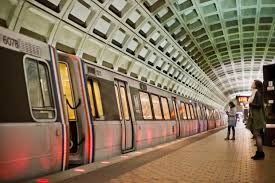
Washington D.C. metro
Photograph by Pablo Martinez Monsivals/AP Photo
citylab.com
Hello Everyone:

It is time for the weekly edition of Blogger Candidate Forum.  Karma is wonderful thing.  In 2009, Representative Joe Wilson (R-South Carolina) shouted "you lie" during former-President Barack Obama's maiden speech to Congress.  Several years later, at a town hall meeting in his constituency, audience members shouted "you lie" at Rep. Wilson.  Got to love karma.  Alright, on to today's subject: transportation spending.

Transportation measures where quite prominent on the November ballot.  For Blue urban dwellers, like Blogger, they offered a glimmer of hope seeping through the dark Republican clouds.  On either side of the political aisle, there were those who thought that newly elected President Donald Trump would follow through on his much ballyhooed promise to spend the $1 trillion investment to

build new roads and highways, and bridges, and airports, and tunnels, and railways, all across our wonder nation.

This all sounds wonderful but if President Trump's budget proposal goes through, rural transportation program could also feel the pain of budget cuts.  To date, the proposed 2018 Federal Budget has not been actively discussed in Congress, thus whatever cuts are still up in the air.

Amtrak conductor
pressherald.com

Laura Bliss reports in her CityLab article, "For Urban Transit, a Hostile Budget," "But where heard opportunity, others sensed hot air."  POTUS's proposed federal scheme   those fears: "The Department of Transportation (DOT) is slated for a $2.4 billion cut."  In short, urban public transit systems, Amtrak, and aviation networks should be ready to feel the pain.

Transportation policy makers were were predicting the TIGER grant, the program that awards billions in extremely flexible grants to local transportation projects since 2009, would take a big hit.  This program is a unicorn, it enjoys bipartisan Congressional support.  TIGER has helped create a bus-rapid transit line in Birmingham, Alabama; commuter rail infrastructure in Chicago, Illinois.  If it goes through, the proposed budget would eliminate the program, "stating it would save the feds $499 million annually."

Agency-by-agency look at the proposed
2018 Federal Budget
bigstory.ap.org
 The next proposal to the transportation budget is a cap on the Federal Transit Administration's Capital Investment Program-"New Starts."  Ms. Bliss writes, "The budget proposes 'funding to projects with existing full funding grant agreements only.'"  This translates to Boston's Green Line extension and the Portland-Milwaukee light rail project in Oregon would be spared.  However, most of the "shovel-ready" projects, to borrow a phrase from POTUS, do not have a full agreement in place.  This includes, to the dismay of Blogger's San Francisco Bay Area friends, Caltrain's electrification project.  Ms. Bliss reports, "Dozens   of projects would in limbo, among them several metros that passed major transit referenda in November, including Los Angeles, Indianapolis, and Seattle."  Transportation researcher and consultant Yonah Freemark (@yfreemark) assembled a full list that can be viewed on his Twitter feed.

Despite billions in local funds earmarked and available, these and other cities would run into serious problems bring these projects to fruition, "not to mention their promises of improved mobility, environmental mitigations, and economic development."  Those potential benefits extend well beyond the confines of the city, but the budget proposal does not see it this way.  The document states,

Future investments in new transit projects would be funded by the localities that use and benefit from these localized projects... (http://www.federal-budget.insidegov.com; date accessed Apr. 12, 2017)

"President's Proposed $1.15 Trillion Discretionary Budget (FY 2017)
grist.org

Mr. Freemark observed, "That's strange language...for a president who wants to pass a federal infrastructure bill."  He tweeted,

If his government believes this, what projects would an infra bill?

In an aside, "Toll roads, perhaps, and maybe more gas and oil pipelines."  Further,  "which 'inner cities' does Trump plan to revitalize if not those in the metros on the cut-list?"

The Trump budget proposal also advances two primary Republican desires: "privatize the Federal Aviation Administration's air traffic control function and axe funds for Amtrak."  The budget document also proposes the total elimination of support of intra-state train service, that would allow Amtrak to focus on better managing its State-supported and Northeast Corridor train services (Ibid).  This maybe a challenge, considering that one of the most critical and necessary projects is improvements to NEC service-"the highly complex Hudson Tunnel Project-is on the list of 'New Starts' projects that would be passed up for funding."

Trump Budget Plan
whsv.com
President Trump's budget also proposes ending the $175 million Essential Air Service programs, "which subsidizes flights in and out of rural airports."  This may be problematic for POTUS because targeting access to rail and air travel could affect his rural support base.  Ms. Bliss writes, "...this document seems to operate on the assumption that rural Americans do not wish to travel further  than their cars can take them, as it shows an unflinching commitment to funding new roads and highways."

The proposed budget gives priority to the Nationally Significant Freight and Highway Projects grant program which, according to the plan,

...supports larger highway and multimodal freight projects with demonstrable national or regional benefits...(Ibid)

A few key points to keep in mind: "This budget does nothing to touch the largest pot of federal transportation spending, which is the Highway Trust Fund."  Money from the perpetually insolvent fund comes from a gas tax that has not been adjusted in 24 years and is allocated based on in entrenched 80-20 percent split between highways and mass transit.  Therefore, it will take a massive act of congress will (or divine intervention) to change this split one way or another.

Another key point to remember is Congress argues and ultimately settles the federal budget, not President Donald Trump.  Already, Democratic lawmakers have been quick to point the big fat lies implicit in the budget in regards to POTUS's commitment to transportation, infrastructure, and the Republicans have promised to push back on specific cut.  Transportation secretary Elaine Chao came out in support of the TIGER program.  Laura Bliss speculates, "The President may just be lobbing dirtballs at buses, trains, and plains-now it's up to Congress to either join in or fire back."

Whatever the ultimate final outcome of the budget negotiations, "Transit funding, which was already tenuous in recent administrations, is not about to get easier to come by."

Tuesday, April 11, 2017

Looks Can Be Deceiving

http://www.citylab.com/politics/2017/03/even-healthy-suburbs-are-dying-from-drugs/521136/?utm_source=nl_link2_033017


Hypodermic needles
Photograph by Mel Evans/AP
thenet24h.com
Hello Everyone:

White House Press Secretary Sean Spicer really stepped on a yuge pile of poo with his enormous height of stupidity Holocaust analogy.  Blogger thinks Mr. Spicer has finally cracked bigly under the pressure of the job.  Sean, we understand.  You have a highly stressful job and you were bound to lose it.  Alright, on to today's subject-opioid addiction in the suburbs.

Opioid addiction, like any addiction, strikes men and women, regardless of race, ethnicity, religion, socio-economic status, or place.  Laura Bliss begins her CityLab article, "Even Healthy-Looking Suburbs Are Dying From Drugs," cites the example of Essex County, Massachusetts.  On the surface, the historic suburbs on Boston's outskirts, do not look sick.  The County has not been plagued by diabetes, obesity, or cardio-vascular disease.  The County's residents are insured.  Taking into account socio-economic factors that impact health, "...it should actually be in better-than-average shape: Nearly 38 percent of the population is college-educated.  Only 11 percent live in poverty."  So, you ask, what is the problem?

Map of Essex County, Massachusetts
family search.org

The problem facing Essex County is drug addiction is claiming lives at a rapid rate.  This true not just in Essex County but other counties across the United States.  Ms. Bliss reports, "In 2010, drugs were responsible for the deaths of roughly 11 out of 100,000 people countywide-a rate that nearly tripled to 31 by 2015, according to data from the Centers for Disease Control and Prevention (http://www.wonder.cdc.org).

This deadly spike-powered by heroin and prescription painkillers-is part of the "national opioid addiction that's been growing for years."  Essex County is the model for an "emerging geographic dimension of this crisis: Larger, suburban counties outside of major metros-..."  These are places should be healthy by typical standards but are the places where drugs have claimed the most lives.


"Trends in Premature Death Due to Drug Overdose by Community Type
from 2006 to 2015"
Robert Wood Johnson Foundation
countyhealthrankings.org

At the end of March 2017, the Robert Wood Johnson Foundation (http://www.rwjf.org) released its 2017 County Health Rankings and report which analyzed county data from all 50 states, focusing on 30 public health results and behaviors.  Ms. Bliss writes, "The report finds there's been a clear flip in the geography of addiction: One decade ago, large suburban areas experienced the lowest rates of premature deaths due to drug overdoses.  In 2015, they had the highest."

The Johnson Foundation study does not specifically which counties experienced the greatest increase in drug-related deaths.  The study ranks every American county, according to each state, using information that presents local health conditions, such as diabetes and obesity, as well as gauges that can foretell health outcomes including teen pregnancies, smoking, and grocery store access.

Laura Bliss writes, "Comparing those numbers to the Johnson Foundation report, I found startling disconnects between deadly drug problems and places that have an otherwise fairly 'healthy' facade." Returning to Essex County, it "ranks sixth out of the 14 counties in the Bay State [Massachusetts] by the new report-middle-of-the-road when it comes to chronic health conditions that normally wave red flags for public health researchers."  Be that as it may, the number of drug-related deaths is growing at an alarming rate.

Map of Cincinnati, Ohio neighborhoods
en.wikipedia.org

 On the outskirts of Cincinnati, Ohio, "Boone County, Kentucky, ranks first out of 120 across its state on all other health rankings.  Like Essex County, Boone County has low rates, of diabetes, smoking, and teen pregnancies, poverty is kept down, and employment is solid.  However, CDC data revealed that drug-related deaths jumped from 26 in 2010 to almost 46 in 2015.  Clermont County is ranked in in the middle of Ohio's 88 counties and is part of the Cincinnati metropolitan area, saw a similar spike.  Another case, Clay County, part of the Jacksonville, Florida metropolitan area comes in at number eleven of the state's 67 counties.  However, drug-related deaths grew from 14 in 2010 to 23 in 2015.

While these statistics seem grim, there was some positive news.  Ms. Bliss reports, "Some suburbs appear to making improvements: for example, Paulding County, Georgia, on the edges of Atlanta, saw its yearly rate drop from roughly 27 to 16 from 2010 to 2015."

That aside, the Johnson Foundation study states that "premature deaths related to drug overdoses rose across community types-suburban, urban, and rural."  Healthy-looking counties monitoring opioids claim "an alarming number of too-young lives, they very highest rates are still found in some of the poorest, sickest parts of the country."  For example, in 2015, McDowell County, West Virginia recorded 141 narcotics-related deaths-the highest in the United States.  It was also ranked last in the the state's rankings ("West Virginia has been ground zero in the nation's opioid epidemic, largely due to a tragic confluence of economic factors).

The Centers for Disease Control and Prevention reports "Drug mortality rates are notoriously shifty...they're likely undercounted in many countries due to unresolved cases and misclassification."  The nationwide pattern is clear, too many young Americans are dying from drug addiction-"even in communities that otherwise appear healthy."

One more thing: If you or someone you know is suffering from drug and alcohol addiction, please click on one or all of the following links for help:

https://www.drugabuse.gov
https://www.aa.org
https://www.na.org
https://www.ca.org
https://www.crystalmeth.org


Monday, April 10, 2017

Place And Economic Mobility

http://www.citylab.com


Leaking hydrant in front of two vacant houses
Detroit, Michigan
Photograph by Rebecca Cook/Reuters
citylab.com
Hello Everyone:

It is a sparkling beginning to another week.  For those of you celebrating: Happy Passover.  New week, new subjects to talk about.

Allow Blogger to start with a question: does where you influence you economic mobility? This is the question Richard Florida considers in his CityLab article "The Persistent Inequality of Neighborhoods."  The growing economic inequality, in the United States, has been blamed for "...everything from crony capitalism to the displacement of once good-paying job by globalization and new technology."  However according to a significant recent study, the real cause of  the growing schism between rich and poor is linked to the neighborhoods in which we born and raised.

South Bronx, New York
wnyc.org
The new study expands on the vital ongoing work of Harvard sociologist Robert J. Sampson and incorporated a larger economic mobility report, Economic Mobility, Research & Ideas on Strengthening Families, Communities & Economy (http://www.stlouisfed.org; date accessed Apr. 10, 2017), published by the St. Louis Federal Reserve Bank.  The study looks at "the rise of neighborhood inequality and its effects on the economic mobility of Americans.  The study asks two basic questions: 'How mobile are neighborhoods?' and 'How mobile are individuals across neighborhood income types?'"  The study uses Census date for neighborhoods throughout the U.S. between 1990 and 2012, and more detailed information from the 2014 Mixed-Income Project (http://www.projects.iq.harvard.edu: date accessed Apr. 10, 2017) to trace the effects of neighborhood locations on the mobility of people living in two of the largest American cities: Chicago and Los Angeles.

Richard Florida reports: "The study examines and compares two key measures of neighborhood income status-median family income and the 'degree of mutual exposure of lower- and higher-income persons'- for Census tracts or neighborhoods in these two cities."

South Memphis, Tennessee neighborhood
Photograph by Andrea Morales
placesjournal.org
Neighborhood poverty is persistent over time

The first fact you need to know and understand is "neighborhood poverty is stubbornly persistent across time."  How persistent is poverty across time?  Across the U.S. about "80 percent of poor neighborhoods in 1990 remained so in 2000, and 75 percent of poor neighborhood in 2000 remained so in 2012."  In the study cities, just about no neighborhoods moved from the bottom fifth to the upper fifth of the the income distribution scale.  Mr. Florida writes, "Just 5 percent of Chicago's high-poverty neighborhoods managed to improve to the top two quintile, and a mere 2 percent of L.A. neighborhood did so."  The grim reality of the situation is that poverty is so persistent and neighborhoods at the very bottom of the economic food chain operate, some degree, as poverty traps.

Chicago skyline
richard-seaman.com
Conversely, there is a persistence of affluence at the top of economic food chain.  Mr. Florida writes, "Very few affluent neighborhoods fell markedly down the economic strata.  Across the United States, 80 percent of affluent neighborhoods in 1990 remained affluent two decades later.  In Los Angeles 87 percent of affluent neighborhoods in 2000 remained so in 2010.  In Chicago that figure was 77 percent."

Interestingly, Professor Sampson found little evidence to support the claim that gentrification made a dent on persistent poverty-"less than three percent of U.S. neighborhoods in the bottom two income categories during the 1990s and 2000s moved above the 60th percentile."  Further, "a relatively small amount (50,000 neighborhoods) climbed from the bottom level to the top."

Prof. Sampson wrote:

...These findings militate against that income inequality is somehow recent at the neighborhood level or that neighborhoods have radically repositioned themselves.  Just as individual income mobility has been fairly low for some time, the odds of neighborhood-level upgrading are relatively low, and persistent neighborhood inequality has existed for decades....  (http://www.projects.iq.harvard.edu)

Los Angeles skyline
ucrtoday.ucr.edu
The gist of this is that the U.S. "suffers from a neighborhood inequality of 'concentrated extremes' that persist over long periods of time."  In both Chicago and Los Angeles, "90 percent of individuals who get up in an affluent neighborhood stayed at or near the top   and fewer than 10 percent of those who started in poor neighborhoods were able to climb to these affluent places."

This is true regardless of the deep changes in the economy and society throughout the Great Recession, growing inequality, and a significant drop-off in urban crime.  Prof Sampson wrote

...The facts on individual income mobility are crucial, of course, but they tell only half the story...The other half pertains to the prospects of change in one's community of residence: Individuals are born into, grow up, and become adults in neighborhoods that are also highly unequal....(Ibid)

Side-by-side comparison of affluent and low-income neighborhoods
Photograph by Oscar Ruíz
worthytales.net

On the positive side, Prof. Sampson found evidence of limited mobility or "fluidity" among middle class neighborhoods.  Here, both Chicago and L.A. outpaced the national average.  Specifically, "...37 percent of Chicago's neighborhoods and 47 percent of L.A.'s remained in the middle-income group over the span of two decades."  However, "...middle-income neighborhoods have become increasingly vulnerable over time and that the once vibrant middle of America's neighborhood geography has essentially hollowed out."  In short, the juxtaposition of neighborhood inequality is defined by side-by-side concentrations of disadvantage an concentrate advantage at the extremes, and the increasing precariousness of the middle.

"The cost of inequality"
news.harvard.edu
Race shapes economic advantages and penalties in neighborhoods, even when controlling for key factors

Race plays a very significant part in neighborhood inequality, according to Prof. Sampson's research.  Regardless of predictions of  the decreasing role of race and the increase of a post-racial society, Prof. Sampson also concluded "...neighborhood poverty and inequality to be inextricably linked to race."  Probing this further, he examined  the "...relationship between neighborhood income and race/ethnicity over time, controlling for factors such as immigrant generation, education, education, employment, family income, household size, home ownership, and martial status."  Prof. Sampson revealed a "clear economic advantage for white neighborhoods and an economic penalty for black neighborhoods."

Chicago African-Americans were found to have a nearly $19,000 lower median income than Caucasian, $8,000 less in Los Angeles, after taking baseline neighborhood incomes into account.  Prof. Sampson points outs,

...white privilege in neighborhood status is maintained after controlling for the classic mobility-relate features of individual background, residential mobility and the macro effects of the Great Recession...  (Ibid)

African-American neighborhoods are more effected, than Caucasian neighborhoods, to greater poverty, more unemployment, and greater crime an isomer.  In short,

...racial inequality in exposure to low-income neighborhood environments is so strong that high-income blacks are exposed to greater neighborhood poverty  than low-income whites...  (Ibid)

Map of Concentrated Poverty in Baltimore
cityobservatory.org
Poverty policies can be "people-orientated" and "place-oriented"

Professor Robert J. Sampson also focused on what solutions can be found to combat America's neighborhood inequality.  Richard Florida reports, "He divides our current approach to poverty into tow main buckets.  One the one side are 'people-oriented' policies, favored by many economists, that aim to move people, particularly young people, out of disadvantaged places and relocate them to neighborhoods with better schools and services."  A recent study, The Effects of Exposure to Better Neighborhoods on Children: New Evidence from the Moving to Opportunity Experiment (http://www.scholar.harvard.edu), concluded that "people-oriented strategies can work: The children of families who used vouchers to move from higher to lower poverty neighborhoods had higher adult earning, though this effect was much greater for children who moved at a very young age."  The flip side, "place-oriented" policies that aim to fortify neighborhoods; improve them and make them stronger.

Minneapolis, Minnesota-area neighborhood
tcdailyplanet.net
 Prof. Sampson makes the argument, which Richard Florida agrees with, that we need to employ both solutions.  Expansion of people-oriented solutions, in the short-term, "would allow talented kids to avoid the negative effects of their old neighborhoods."  The long-term approach "would be more substantial investments to improve disadvantage neighborhoods.  Prof. Sampson points out:

What poor residents seem to want most is not move but simply to have their communities revitalized.

To make this simple wish come true, Prof. Sampson "argues in favor of what NYU's Patrick Sharkey has dubbed 'durable investments in neighborhoods-large-sacle interventions in education, health, employment, crime-reduction, community social services, and the whole gamut of strategies required to combat the long legacy of persistent disadvantages in these places."  Blogger concurs with this approach.  Prof. Sampson makes a particularly effective case for what he refers to affirmative action for neighborhoods, involving cash assistance or reduced tax rates for residents in low-income or historically disadvantaged areas.

The United States has always been "the land of opportunity" but that opportunity has not always been equal for quite a while, if at all.  The middle has hollowed of our cities, inequality is firmly engrained into our increasing divided map.  Prof. Robert J. Sampson concludes,

The salience of neighborhood difference has persisted across long times scales and historical eras...spatial arrangements constitute a fundamental organizing dimension of social inequality.  Essentially, place determines our economic mobility.

Wednesday, April 5, 2017

Blogger Candidate Forum: Love Transportation? Tell Congress

https://www.citylab.com/transportation/2017/03/hey-transit-fans-worry-about-congress-not-trump/519144/?utm_source=nl_link3_031017

Mayor Eric Garcetti at a campaign rally
dailynews.com
Hello Everyone:

Technical issues banished, Blogger escaped the pre-Passover madness to bring you the weekly edition of Blogger Candidate Forum.  The subject for today is funding cuts to transportation.

Laura Bliss tells us, in her CityLab article "Hey Transit Fans: Worry About Congress, Not Trump," that despite newly re-elected Los Angeles Mayor Eric Garcetti's (D) transportation ambitions, Congress may derail his plans.  Los Angeles is a growing metropolitan region and reliable, safe, affordable transportation is crucial to the region's growth.  Ms. Bliss writes, "The Democrat will continue to shepherd  the city through Measure M, a $121 billion transit initiative that passed overwhelmingly at November's ballots."  Measure M (http://www.theplan.metro.net) would bring "Hundreds of miles of new rail connections, bus-rapid transit lines, and robust bike infrastructure improvements...over the next 40 years."  Sounds like a bright future for Los Angeles, right?  Well, not exactly.  Read on.

Mayor Garcetti speaking with VICE Media reporter
youtube.com
the source.metro.net
    Most of the funds to pay for this grand transportation scheme will come local taxpayers, the projects are dependent on a massive federal  funding infusion.  Only one problem, Los Angeles remains an attraction for immigrants and "nearly one in ten people living the country is believed to be undocumented.  VICE News reported in a video posted on http://www.youtube.com,

...which could make things awkward... 

President Donald Trump has threatened to defund any city that refuses to cooperated with federal immigration enforcement.  To date, Mayor Garcetti has refused to identify L.A. as a sanctuary city although he has promised to

...all Angelenos feel, safe, secure and welcome in our community...

He has also been critical of the President's travel bans and immigration policies.  The VICE video suggests, "To accomplish his 'signature initiative,'...the mayor will need to negotiate a delicate relationship with the White House."

POTUS promising to end sanctuary cities on the campaign trail
politifact.com
Eric Garcetti is not the only Democratic big-city mayor facing this dilemma.  However, President Trump's threats are not the biggest problem for American cities with ambition mass transportation plans-the real worry is the Republican-controlled Congress that should concern commuters.  The Republican members of Congress are more in touch than POTUS to local political debates over infrastructure  investments.  Laura Bliss points to the "unfolding showdown over a $647 million federal grant to a regional commuter train in the Bay Area."

San Francisco pro-sanctuary city protest
nbcbayarea.com 

Laura Bliss suggests, "Furthermore, rather than anticipating retribution for clashing with Trumpian ideology, cities should just prepare for serious transit funding cuts in general."  A prudent suggestion.  Another possible challenge, "Unless longstanding federal formulas are changed, the threadbare Highway Trust Fund will still pass onto states a handful of dollars to be used for public transportation."  The metaphoric Sword of Damocles hanging over the Environmental Protection Agency and the Department of Housing and Urban Development could hang over the Department of Transportation as well; "...signature grant programs that have supported transit-such as TIGER and TIFIA-may get cut."  Not shocking considering that the official Republican Party platform called for the complete elimination of federally subsidized public transportation.  Joni gone, the head of communications at LA Metro, told VICE, But ti's not just L.A. that might struggle to deliver-it's all cities.

Secretary of Transportation Elaine Chao
en.wikipedia.org

Secretary of Transportation Elaine Chao has stressed the role of private investment will have in paying for President Trump's proposed $1 trillion infrastructure plans.  Confidence in how public-private partnerships will successfully fund transportation is mixed, at best.  The Chief Executive of L.A. Metro, Phil Washington is a avid supporter; "...some Measure M projects may stand a chance of speeding with creative financing that depend on industry."  Los Angeles could be the example of how Trump-era cities can put together DIY infrastructure.  For now, worried mass transportation aficionados might want to pay more attention to what their senators and representatives are saying, rather than what statements are coming out of the White House.  Let him or her know on their social media pages, via email or telephone.

Tuesday, April 4, 2017

Why Cooperate?

http//www.city.com/crime/2017/03/the-rise-of-anti-sanctuary-cities/5173777/?utm_source=nl_link1_030117


Border patrol vehicle near the U.S.-Mexico borders
Nogales, Arizona
Photograph by Jae C. Hong/AP
citylab.com
Hello Everyone:

Welcome to a new week at historicpca.blogspot.com.  Today we are returning to the subject of sanctuary cities.  Over the past few posts, yours truly has been looking at the history and impact of sanctuary cities.  This post is going to examine anti-sanctuary cities.  These are jurisdictions that pledged to enforce the new immigration agenda.  Why would a city do that, you may ask.  The reasons, as alway are not so clear cut as you may think.  Our guide for the session is Tanvi Misra's CityLab article "The Rise of Anti-Sanctuary Cities."  Apparently, there is an interest in complying with immigration enforcement, regardless who is president.

Case in point, officials in Anne Arundel County, Maryland announced that it would take a moderate and measured approach to immigration enforcement by applying for a program that trains local law enforcement to enforce federal immigration law.  Owen McEvoy, spokesperson for the the county executive, told CityLab,

We work with the federal government pretty much across the gamut, whether it's heart issues or education.  Why would we stop at immigration?

Why, indeed, would a jurisdiction cooperate with the federal government on immigration?  Shall we have a look?

President Donald Trump speaking before Congress
February 27, 2017
cnn.com
During his speech to the joint session of Congress, President Donald Trump reaffirmed his commitment to stricter immigration enforcement.  He told the assembled lawmakers, cabinet secretaries, Joint Chiefs of Staff, and Supreme Court justices,

My administration...has answered the pleas of the American people for immigration enforcement and border security.

The week before, the Department of Homeland Security, issued guidelines (http://www.dhs.gov; date accessed Apr. 3, 2017) on implementing the president's immigration executive orders.  Ms. Misra writes, "It included a provision on a controversial enforcement program, 287(g)-a provision of a 1996 federal immigration law that deputizes local police police and detention officers to enforce immigration in jails or out on patrol."  Specifically,

The Commissioner of CBP and the Director of ICE should consider the operational functions and capabilities of the jurisdictions willing to enter into 287 (g) agreements and structure such agreements in a manner that employs the most effective enforcement model for that jurisdiction, including the jail enforcement model, task force force officer model, or joint jail enforcement task force officer model.

Sarah Saldana, Director of Immigration and Customs Enforcement
c-span.org
Tanvi Misra points out, "There's a couple things of note in the two DHS memos.

"First, they resurrect the 'the task force model' of 287(g), which allows police officers to enforce immigration laws in the field, which had been scaled back under Obama administration after racial profiling concerns.  Second, the memos open up the program to Customs and Border Protection; previously participating jurisdictions were only takin on ICE's responsibilities.  And finally, the language suggests that the government will be taking an active role in getting local jurisdictions on board."

Daniel Stageman, the director of research at the John Jay College of Criminal Justice at City University of New York notes, That's a very, very different model to what's been in place...It has the potential to expand the program exponentially.

Former Arizona Sheriff Joe Arpaio
lattices.com
Mr. Stageman has been following places that agreed to implement 287(g), and he identified two factors that make a jurisdiction most likely to do so.  First is a sheriff with a nativist platform.  Second, a recent increase in the Latino population.  Ms. Misra writes, "New 287(g) counties are likely to pop up where the program was in the first place-in Southeastern states like North Carolina and South Carolina, and in Arizona, home of Maricopa County and its infamous former sheriff, Joe Arpaio."

Daniel Stageman continues,

It's hard to say where the more aggressive Trump-era task-force iteration of 287(g) will catch on-it's a "harder sell..."

However, for local jurisdiction that agree to work with ICE to detain undocumented immigrants in jails, rounding up and holding immigrants for deportation by implementing that model might be considered a fruitful option.  One example is Bristol County, Massachusetts, "which signed it's 287(g) agreement this year, score a trifecta: a notoriously anti-immigrant sheriff, a growing Latino population, and a contract that brings in $90 per day for each jail bed occupied.

287(g)
vvng.com

The rise and fall of 287(g)

Before we go any further, let us take a step back and briefly look at the history of 287(g) program.  The program first went into effect in the 1990s, but it only gained traction after 2006.  Not long after, complaints began to emerge.  In 2010, the Office of Inspector General and Government Accountability Office issued reports that revealed that ICE had little oversight officers charged with carrying out the complex immigration enforcement, leaving ample space for abuse and discrimination.  A 2011 Justice Department investigation brought to light "rampant racial profiling and civil rights abuses in Maricopa County, Arizona, prompting DHS to rescind its task force agreement with the county."  Other jurisdictions with similar agreements, met the same fate.


In 2008, President Obama's administration enacted another municipal immigration enforcement program dubbed Secure Communities.  The goal of this program is: "anyone booked into jail has their fingerprints run through an immigration database.  If it matched, ICE asked police departments to detain these individuals for extra time."  ICE endorsed this program a more efficient use of resources than the 287(g)  task force mode.  Ms. Misra observes, "Considering the two mostly synonymous, many jurisdiction that participated in Secure Communities let their 287(g) agreements expire."

Phoenix, Arizona
fragomen.com

CityLab created a map, which can be view by following the link: http//www.city.com/crime/2017/03/the-rise-of-anti-sanctuary-cities/5173777/?utm_source=nl_link1_030117 showing which municipalities opted in or renewed their 287(g) agreement, after the Obama administration reconfigured the program.  States outlined in red are home to the current 287(g) jurisdiction (dark grey).  They flicker red on the date they opted in.  Ms. Misra notes, "A couple of things to keep in mind: The state correctional facilities with the jail enforcement program are marked by their headquarters."  The upswing in 2016 are primarily due to jurisdictions renegotiating their 2012 contracts, not new agreements, albeit there a those as well.

Map of Arizona, showing Maricopa County
en.wikipedia.org

Maricopa County, and the costs of 287(g)

Tanvi Misra shares the story of Guadalupe García de Rayos.  On February 8, Ms. García  de Rayos went for, what feared, was her last check-in with the ICE office in Phoenix.  Although she had a deportation order from 2013 hanging over head, the authorities had let her pass for many years.  On that evening, she was not so lucky.  Despite protests and with her two children looking on, she was immediately sent back over the border to Nogales, Mexico.  Ms. García  de Rayos later told reporters,

The truth is I was there [in the United States] for my children.  For a better future.  To work for them.  And I don't regret it, because I did it for love.

Ms. García  de Rayos caught ICE's attention in 2008 after a raid, ordered by former Maricopa County Sheriff Joe Arpaio, at Mesa water park, where she worked without papers.  These types of raids were commonplace after the former sheriff signed on to task force enforcement.  The former sheriff took these new powers to the absolute limit-and beyond.  His much reviled posse habitually stopped anyone who looked Latino for all sorts of tribal reasons, raided immigrant neighborhoods and businesses, unlawfully detained immigrants, subjected them to excessive force and physical abuse, punishing them for not speaking English.  These enforcement tactics were absolute policy.  He told the Arizona Central after he signed on to the program,

You go after illegals.  I'm not afraid to say that...You go after them and you lock them up.

Guadalupe García de Rayos
abc15.com

At the Marshall Project (http://www.themashallproject.org), interactive reporter Anna Flagg designed a map (also viewable at http//www.city.com/crime/2017/03/the-rise-of-anti-sanctuary-cities/5173777/?utm_source=nl_link1_030117) that tracks deportations under the 287(g) program between 2006 and 2013, using data released by ICE.  Tanvi Misra reports, "It shows that over 17 percent of the total 175,000 deportations during this time happened from Maricopa County: But this activity came at a steep cost to area taxpayers."  Former Sheriff Arpaio's overtime spending spree on undocumented immigration raids created a $1.3 million deficit, according to an investigation by the East Valley Tribune (http://www.eastvalleytribune.com).  Ms. Misra notes, "ICE foots expenses related to operations but doesn't pay the salaries of the deputized officers."  The ensuing racial profiling lawsuits drained away more taxpayer dollars.  In the meantime, 911 response times increases and felony warrants went unserved, and violent crime went up.

Immigration raids protest in North Carolina
charlotteobserver.com
The high costs of the program have well reported.  In 2010 the University of North Carolina published a comprehensive study that concluded,

...Alamance County had paid around $4.8 million and Mecklenburg, $5.3 million for 287(gO in their first year.  Litigation and loss of tax and business revenue further hurt the bottom line.  Prince William County, Virginia had to make a withdrawal from its rainy day funds to kickstart its 287(g) initiative, according to a Brookings report."

A number of program evaluations found that, in general, it did not target hardcore criminals as it was intended to do, rather, undocumented people who were detained for minor traffic and misdemeanor  offenses.  Sometime, crime victims were swept up in the raids.  Rightly, Ms. Misra points out, "Such policing can create a fear and distrust of law enforcement in immigrant communities, making it a tough environment to protect and serve; the UNC report concluded that there was 'little evidence that the 287(g) Program [was] reducing or deterring crime' in North Carolina."

Undocumented immigration warning sign
gopusa.com
 
If the 287(g) Program is so expensive to maintain, what do jurisdictions actually get out of it, other than political cachet and federal resources?  Supporters of the program argue that it "helps in 'attrition through enforcement'-by creating conditions that lead undocumented folks to self-deport, it stems the growth of  the immigrant population."  This seems to be a popular argument with major Republican party candidates.  This is not entirely true, according to a Migration Policy Institute study that concluded "these programs do lead to 'short-term drops in Hispanic non-citizens, while neighboring counties experience no such decline.'" (http://www.migrationpolicy.org)  The study was careful to mention "that there's no evidence to suggest that the people who moved out of these counties actually left the country."  The report did not examine whether economic circumstances play a role or not.

An administration that has made the deportation of 11 million undocumented immigration will spur enrollment in the 287(g) program.  Tom Jawetz, vice president at the Center for American Progress explained,

There are going to be jurisdictions out there that...are chomping at the bit to sign up not just for 287(g), but the most aggressive 287(g) agreements possible.

Both the amply criticized Secure Communities and the strengthening of the federal immigration enforcement mechanism, the much strengthened deportation engine created under President Obama is now going into overdrive.  Dara Lind wrote in Vox, "it's rank-and-file immigration and police officers who will be in the driver's seat." (http://www.vox.com)  Carlos Garcia's, the direct of the immigrants rights organization that opposed former Sheriff Joe Arpaio, future looks grim.  He told Tanvi Misra, The country is going to realize what Arizona has lived through for a long time.
Wednesday, March 29, 2017

Blogger Candidate Forum: Cities And The American Heath Care Act

http://www.citylab.com/politics/2017/03/the-cities-trumpcare-would-hurt-and-help/520131/?utm_source=nl_link4_032117


Speaker of the House of Representatives Paul Ryan holding a copy of AHCA
Getty Images
politico.eu
Hello Everyone:

It is time for the weekly edition of Blogger Candidate Forum.  Shall we talk about the spectacular failure that was round one of the American Health Care Act?  The much touted "repeal and reform" of the Affordable Care Act (i.e. Obamacare) could not even be brought to the floor of the House of Representatives for a vote because its massive lack of support.  After the fingers were pointed and tweets sent out into the digital universe, the House Republicans are going to try again.  Ironically, the partisan and in-party squabbling may lead to an expansion of the federal Medicaid program.  Meanwhile, let us take a look at house AHCA would affect American cities.

Laura Bliss, in her CityLab article "The Cities Trumpcare Would Hurt (and Help), asks "Which cities would hurt from the Trump-backed health care bill attracting withering criticism on both sides of Congress?"  A new analysis published by WalletHub (http://www.wallethub.com; date acted mar. 29, 2017) 2017's Cities Most Affected by Trumpcare by Richie Bernardo, found that "urban places with large populations of poor, non-white policyholders would see the tax credits they receive under the Affordable Care Act more than halved under the GOP's proposed plan,..."  Cities and towns in the suburbs, exurbs, and rural communities would also experience a reduction in tax credits and coverage.

Downtown Yuma, Arizona
yumaaz.gov
Of the ranked 475 American cities with populations greater 75,000, Yuma, Arizona is the city hit hardest by AHCA, version 1.0.  "The average couple would lose nearly $8,000 in subsidies."  Yuma's population mirrors those who have reaped benefits from ACA; "18 percent of the city's residents lives below the poverty, 55 percent are Latino, and 21 percent are foreign-born, according to Census tracts (http://www.census.gov).  Wallethub's methodology, which relied on the Kaiser Family Foundation's Health Insurance Marketplace Calculator, used a model two-person, joint-filing Yuma household-where neither half of the couple smokes, median age, and earn the city's median income ($43,663 according to city-data.com; date accessed mar. 29, 2017).  The model couple would be eligible for nearly $13,000 in yearly tax credits under ACA's income- and location-based system.  Under whichever version of AHCA eventually makes it (if at all) to President Donald Trump's desk for his signature, the subsidy would drop to $5,000 under the age-based subsidy plan.

Downtown Anchorage, Alaska
alaska.org
Economically challenged cities populate the list of places greatly affected by AHCA.  These cities are notable because they feature "significant concentrations of low-income African-American residents: Syracuse, New York; Chattanooga, Tennessee; Birmingham, Alabama; and Bridgeport, Connecticut fill out the top 25.  One city in particular, Anchorage, Alaska, ranks behind Yuma as the second-worst affected city.  Anchorage is not a particularly economically challenged city but its remote location makes healthcare costs especially high.  Under ACA, Alaskans received some of the most generous subsidies in the United States.  In an aside Laura Bliss, "Relatedly, older, poorer folks who live in truly rural areas-in other words, Trump's biggest supporters-may have the most to lose with the GOP's bill out of everyone."

Aerial view of Newport Beach, California
Photography by D. Ramey Logan
en.wikipedia.org
There cities that would thrive under AHCA-in fact, quite a lot of places, according to WalletHub's 2017's Cities Most Affected by Trumpcare.   Specifically, three-quarters of the 457 cities on the list would benefit from more generous tax subsidies.  Wealthier cities, where many people receive little or nor subsidies under the current system would do particularly well: "Average households in affluent Newport Beach, California; the Woodlands, Texas; and Virginia Beach, Virginia all net $5,000 or $6,000 credits they don't currently receive."

Laura Bliss reports, "WalletHub divides the 457 cities into different population tiers for a more apples-to-apples comparison of different-sized cities.  Still, it is advisable to look at this ranking as an sketch, rather than a completer analysis, of Trumpcare's urban impact, because it uses city limits as its geographic metric, rather than metro areas."  A WalletHub analyst told Ms. Bliss, via email,  that this approach, provided as few data limitations as possible, "but it gives a misleading impression of how the most economically powerful urban areas in the country would be affected."

Downtown Washington D.C.
123rf.com
Metropolises such as Los Angeles, Atlanta, and Washington D.C. would also benefit if and or when the GOP-supported plan.  However, like many big cities, only "city proper" counts in the metric because "these places have higher concentration of wealth than the suburbs and towns that radiate around them."  Suburban Atlanta is notoriously poor, plagued with high rates of chronic diseases; thus repealing and replacing the Affordable Care Act with a zip code and income blind plan would be, to say the very least, very unhelpful.

Following this logic, Ms. Bliss writes, "Wallethub doesn't account for the share of city residents that are currently covered thanks to ACA, nor how many would be projected to drop out of the marketplace sure to the new plan's cost hikes."  Further, the analysis makes no mention about how rolling back Medicaid expansion would impact these cities.  In an aside Ms. Bliss notes, "Reliable Medicaid enrollment data is extremely hard to come by."

On Friday, Speaker of the House of Representatives Paul Ryan (R-Wisconsin) sounded a defeated note admitting that ACA is the law of the land for the foreseeable future.  Never one to admit defeat, President Donald Trump said that perhaps with would be better to let the bill die and the Affordable Care Act explode (it is not) so that he can negotiate a better deal.  The House Republicans are going to try again.  Perhaps they, along with the President, will learn from their mistakes and do better.  Blogger is hoping for a more bipartisan solution but is not holding her breath.     

Tuesday, March 28, 2017

Gentrification Is A Health Issue

http://www.citylab.com/housing/2017/02/health-and-gentrification-in-philadelphia/511310/?utm_source=nl__link4_022217


Keith Haring inspired mural in Philadelphia, Pennsylvania
Photograph by Matt Rourke/AP
citylab.com
Hello Everyone:

Today we are going to return to one of the big subjects on the blog, gentrification.  Did you think yours truly was going to say immigration?  Maybe tomorrow.  We have talked a lot about the impact of gentrification on communities and people.  We are returning to the subject of how gentrification affects people.  Specifically, we are going to look at new study, The Association of Minority Self-Rated health with Black versus White Gentrification by sociologists Joseph Gibbons and Michael S. Barton, published on October 19, 2016 in the Journal of Urban Health (http://www.link.springer.com; date accessed mar. 28, 2017).  Our guid for the day is Richard Florida's CityLab article "Race, Gentrification, and Health in Philadelphia."  The question to consider is do African American residents in gentrifying neighborhoods experience better or health?  Shall we find out?

Fish Town
Philadelphia, Pennsylvania
visitphilly.com
Richard Florida begins, "The impact of gentrification-especially the displacement of lower-income residents-remains a topic of enormous debate in urbanism circles."  True enough.  The majority of research on the topic found that the "the extent of displacement to statistically rather small, in fact,..., Lance Freeman of Columbia University, argues that widespread displacement caused by gentrification is largely a myth."

However, this does not imply that long-term residents do not experience other effects.

The study conducted by Messrs. Gibbons and Barton provides fresh insights into gentrification by studying the health and well-being of African American and Caucasian residents in the throes of it.  The co-authors point out, "the Centers for Disease Control...lists a variety of adverse health effects that may stem from gentrification and displacement, particularly increased stress that can lead to mental health problems, health problems, premature birth, and in some cases death."  The study goes deep into the link between gentrification and health using a sweeping health survey (http://www.chdbdata.org), conducted in Philadelphia, a city that has experienced widespread gentrification.

Gentrification map of Philadelphia
Gibbons and Barton/CityLab
citylab.com

The survey assembled specific information on individual health status and conditions, health-related behavior and access to health care as well as demographic and socioeconomic traits.  Mr. Florida writes, "Gibbons and Barton use this data to compare the health outcomes on black and white residents of gentrifying and other neighborhoods in Philadelphia, using the conventional measures of gentrification-changes in housing in housing costs, incomes, and education levels across neighborhoods or Census tracts."

The map above left identifies the different neighborhoods in the process of gentrifying in Philadelphia.

The map reveals an very fascinating fact: "Nearly 80 percent of the 968 neighborhoods were considered non-gentrifable; a third of the other 20 percent were found to be gentrifying."  Further, out of that third of the other 20 percent, "31 neighborhoods experienced white gentrification and 29 experienced 'black gentrification'-where middle-class black residents move into lower-class black neighborhoods."  The study developed and used statistical models that analyzed the effects of this process on individuals's health.  Income, education, employment, race, and other factors were the control factors.

"Gentrification mapped and correlated between residents reporting poor health scores
Gibbons and Barton/CityLab
citylab.com
Once the gentrifying neighborhoods were identified, the study linked the responses of the health survey to the places where the respondents live.

Richard Florida writes, "While gentrification has an overall marginal effect on improving self-raid health, it led to worse health reports from black respondents."  The map on the left-had side diagrams the strength of the correlation between race and self-rated health in neighborhoods around Philadelphia.

What we find is African American respondents "...were more likely to rate their health as poor or fair neighborhoods that are gentrifying  or those that are nearby..."  In general, African American respondents "...were 27.3 percent more likely than white respondents to report poor to fair health."  However, African American respondents residing in gentrifying neighborhoods were nearly "...75 percent more likely to report poor-to-fair health than counterparts in other neighborhoods.

Philadelphia, Pennsylvania
drexel.edu
When factoring in additional socioeconomic results, the outcomes conclude that there is some doubt that poorer result for African American respondents in gentrifying neighborhoods is caused by displacement.  Joseph Gibbons and Michael S. Barton argue that "the endurance of these bad health outcomes suggest the subtle effect of gentrification's cultural displacement."  Further, "That change is also difficult to quantify: Self-reported bad health outcomes had similar correlation in neighborhoods experiencing black gentrification."

Whatever the gentrifying process may be, The Association of Minority Self-Rated health with Black versus White Gentrification alluded to the idea that importing affluence and resources to a community is not necessarily beneficial to long-term residents.  Like the income gap, disparities in health, effecting rich and poor, are more sustainable.