Wednesday, August 14, 2019

Blogger Candidate Forum: Standing On Your Own Two Feet


Hello Everyone:

It is a warm and lovely Wednesday and time for Blogger Candidate Forum.  First an update on a post about flipping the United States Senates.  Former Colorado Governor John Hickenlooper is in talks to end his presidential campaign and refocus his efforts on a Senate campaign.  Good move on his part, he has a better chance of winning that race.  Last Saturday, the Houston Chronicle (houstonchronicle.com; Aug. 10, 2019; date accessed Aug. 14, 2019) published an editorial urging Beto O'Rourke to drop out of the presidential race and run for Republican Senator John Cronyn's seats.  Based on the comments in the social media, a lot of people--including Yours Truly--think it is a good idea.  Stayed tuned.  Onward.

Image result for ken cuccinelli
Acting USCIS Director Ken Cuccinelli
nypost.com

   Blogger managed to stop gagging over the latest proposed immigration regulation long enough to write down a few thoughts.  The latest proposal is intended to encourage non-citizens living the U.S. to become more self-sufficient.  A White House fact sheet issued on Monday outlines three main points to ensure that non-citizens do not abuse the social welfare system.

Under the heading of Protecting Public Resources, the White House wrote,

...An alien who received public benefits above a certain threshold is known as a "public charge."

  • Aliens will be barred from entering the United States if they are found likely to become public charges
  • Aliens in the United States who are found to become public charges will also be barred from adjusting their immigration status (whitehouse.gov; Aug. 12, 2019; date accessed Aug. 14, 2019)

Alien is the legal definition for any person who is not a naturalized or born-citizen of the United States.  There are different categories of alien: resident and non-resident, immigrant and non-immigrant, asylee and refugee, document and undocumented (i.e. illegal; law.cornell.edu; date accessed Aug. 14, 2019).  The term "Public Charge" is used by U.S. immigration to defined someone who is "considered primarily dependent on the government for subsistence, as demonstrated by either receipt of public cash assistance for income-maintenance or institutionalized for long-term care at government expense" (nilc.org; date accessed Aug. 12, 2019).  Given the definition of "public charge," what criteria will the USCIS use to determine who is a public and who is not.

Image result for U.S. Customs
U.S. Customs point
marketwatch.com
The Trump administration's point, or so they say, is to encourage self-sufficiency.  A sense of self-sufficiency has been embedded in the U.S.'s DNA since pre-colonial times.  The White House fact sheet cites,

  • Public charge has been a part United States immigration law for more than 100 years as a grounds for inadmissiability.
  • Congress and President Bill Clinton signed two bipartisan bill in 1996 to help stop aliens from exploiting public benefits
    • This included the Personal Responsibility and Work Opportunity Reconciliation Act and the Illegal Immigration Reform and Immigrant Responsibility Act....
  • Americans widely agree that individuals coming to our country should be self-sufficient, with 73 percent in favor of requiring immigrants to be able to support themselves financially (whitehouse.gov; Aug. 12, 2019)

Fair point but it ignores the fact that lawful immigrants--i.e. those that arrive with passports, letters of sponsorship, and visas--do work and strive to become self-sufficient.  Most are unskilled, non-English immigrant who find work in, for example, restaurants busing tables or cleaning offices.  These jobs and others like it are not always full-time employment and lawful immigrants must work two jobs just to help make ends meet.  Even then there can be a short fall that needs to be made up with social welfare benefits like cash assistance for groceries and Medicaid.
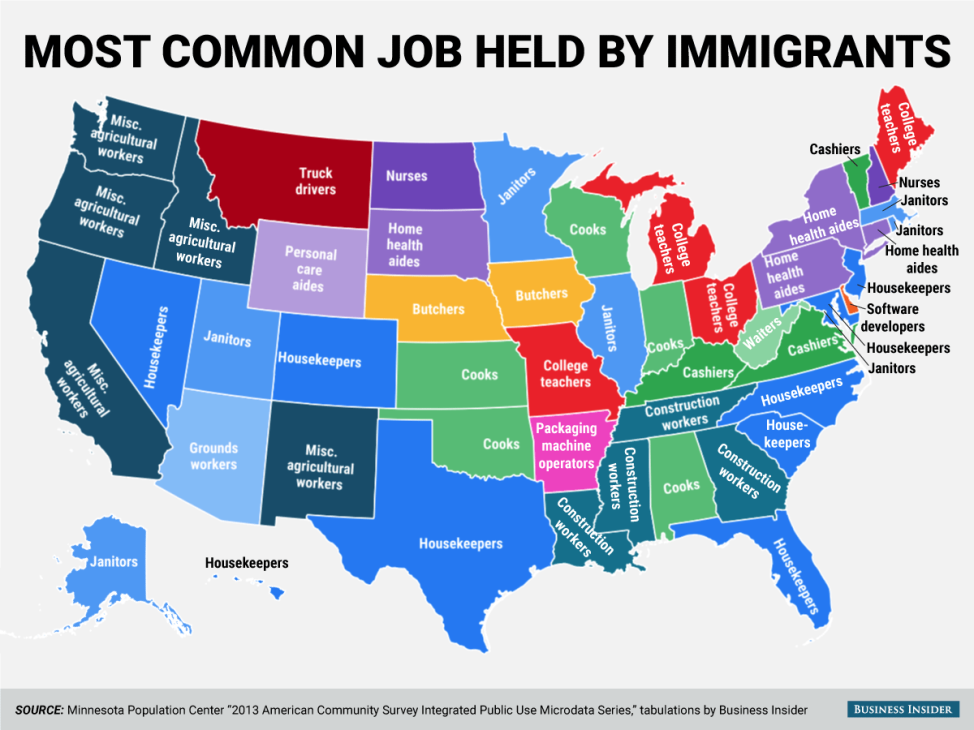
Image result for immigrants working in america
blogs.voanews.com

Understandably the White House is concerned about preserving the social safety but it assumes that immigrants, regardless of legal status, freely abuse the social welfare system.  This assumption is borne out with this point,

Large numbers of non-citizens and their families have taken advantage of our generous public health benefits, limited resources that could otherwise go to vulnerable Americans... (whitehouse.gov; Aug. 12, 2019)


The National Immigration Forum found this statement to be generally false.  An NIF Fact Sheet on Immigration and Public Benefits states, 

...Undocumented immigrants, including DACA holders are ineligible to receive most  federal public benefits.... Undocumented immigrants may be eligible for a handful of benefits that are deemed necessary to protect life or guarantee safety in dire situations....(immigrationforum.org; Aug. 21, 2018; date accessed Aug. 14, 2019)

According to the NIF legal residents do have some access to public benefits,

Only those with lawful permanent resident (LPR) status, but not until they have resided as a legal resident for five years.... and are subject to limitations before being eligible for federal means-tested benefits, including Medicaid, the Children's Health Insurance Program, TANF, SNAP, and SSI....(Ibid)

Image result for social welfare benefits usa
thebalance.com

According to the new regulation (s3amazonaws.com; date accessed Aug. 14, 2019), poised to go into effect on or after October 15, refugees and asylum seekers would be exempt.  However, legal immigrants who use for social welfare benefits for 12 months in any 36 month cycle could find any changes in their immigration status delayed--it would be more difficult to stay in the country or be naturalized (cnbc,com; Aug. 12, 2019; date accessed Aug. 14, 2019).  Further, legal residents with sufficient household income, assets, and resources have a better chance of obtaining LPR status or citizenship than those who cannot demonstrate any employment prospects (Ibid).

As expected, the backlash to the new regulation has been swift.  Marielena Hincapie, the executive director of the National Immigration Law Center told CNBC,

This news is a cruel step toward weaponizing programs that are intended to help people by making them, instead, a means of separating families and sending immigrants and communities of color one message: you are not welcome here,... (Ibid)

New York State Attorney General Letitia James plans to sue the Trump administration.

Democratic presidential candidate Senator Kamala Harris (CA) said Sunday on Meet the Press that the administration is directing the Department of Homeland Security to conduct a campaign of terror (Ibid).

The Trump administration believes that it is promoting self-sufficiency by threatening to withhold changes in immigration status.  The idea is to make it as painful as possible for someone to come to the United States without job and English language skills.  However, this is denying the reality of the American economy.  For example, the agriculture industry has long depended on unskilled workers to work in the fields and processing plants.  The construction industry needs people to work the job sites.  These industries, and similar ones, are cyclical and can mean that an immigrant employee can go for months without work.  Driving an Uber only goes so far and the rest has to be made up somewhere.  Understandably the goal is self-sufficiency but without some sort of social welfare safety, being able to stand one's own two feet and not be a public is harder, especially if your immigration status is jeopardized. 


Tuesday, August 13, 2019

The Global List


Hello Everyone:

Another lovely summer day for Blogger.  The only thing intruding on an otherwise lovely day was acting (like the) director of U.S. Citizenship and Immigration Ken Cuccinelli's mind numbing attempt to re-write Emma Lazarus' welcoming poem at the base of the Statue of Liberty.  Instead of

Give me your tired, your poor, your huddled masses yearning to breathe free...

Mr. Cuccinelli suggested replacing the last phrase with stand on their own two feet  (cnn.com; date accessed Aug. 13, 2019).  Cue the gagging noise.  On to something far more enjoyable, shall we go on a trip around the world?

Image result for barnsdall house
The Barnsdall House/ Hollyhock House
Frank Lloyd Wright
Hollywood, California
laconservancy.org
Every year the United Nations Economic, Scientific, and Cultural Organization' World Heritage Committee nominates of sites of cultural and natural to its annual list.  UNESCO then meets to whittle down the list to a select group that is inscribed on its World Heritage List.  This year the organization met in Baku, Azerbaijian (Ibid) to select 29 sites (whc.unesco.org; date accessed Aug. 13, 2019) were selected to this list that now includes 1,121 sites (Ibid) of outstanding universal value.  Blogger is delighted to announce that eight buildings by American modern master Frank Lloyd Wright, including the Barnsdall House in Los Angeles, California, were selected to join the list.  Why have a look at some of the elite 29 sites that made were inscribed on the list.

Image result for volcano region: Vatnajokull National Park
The volcano region Vatnajokull National Park
Iceland
tripadvisor.com

Vatnajokull National Park was deservedly included on the list of natural sites with its breath taking landscape as were the historic city of Sheki in Azerbaijian and Liangzhu City archaeological ruins in southeast China.  One mixed site--part cultural, part natural--the Paraty and Ilha Grande in Brazil (cnn.com; date accessed Aug. 13, 2019).

One of the more interesting sites is the Jodrell Bank Observatory (jodrellbank.net; date accessed Aug. 13, 2019) in Manchester, England.  The Jodrell Bank Observatory is home to one of the leading radio astronomy telescope.  The observatory dates back to 1945 and its research on cosmic rays, meteors, the moon, and astral phenomena is credited with giving humanity a greater understanding of our universe.  The UNESCO World Heritage Organization also approved the extension of the Natural and Cultural Heritage of Ohrid region in North Macedonia.

Image result for sheki azerbaijan: silk road
Sheki, Azerbaijian
azernews.az

In order for a site to join the World Heritage site list, it has to meet one of 10 criteria including representing a masterpiece of human creative genius or exceptional natural beauty or "being an outstanding example of a traditional human settlement (whc.unesco.org; date accessed Aug. 13, 2019).

UNESCO began adding sites to the list in 1978, with a group of 12 sites (cnn.com; Feb. 4, 2015; date accessed Aug. 13, 2019).  The original list included Yellowstone Park, the United States, the Galapagos Island, Ecuador; and the Island of Goree, Senegal.

Image result for Bohai Coastline the elbow Sea/Gulf
Bohai Bay meets the Yellow Sea
tour-beijing.com

Not all natural and cultural heritage sites make the annual list.  A "no" vote does not mean a site is designation-worthy now or in the future.  A country can spend years developing pitch for inclusion, in an effort to attract the cultural capital, tourist, and resources in order to raise the money needed for restoration and protection.  Countries must also convince UNESCO that they are committed to protecting and financially supporting their site or sites.  For developing nations, this can be quite formidable task but sometimes, the investment pays off. In some cases, countries have a fraught relationship with UNESCO because of international politics.

Image result for liangzhu archaeological site
Archaeological ruins of Liangzhu City
China
chinadaily.com.cn

In January of this year, member nation the United States announced it was leaving the organization citing that it was anti-Israel because it accepted a Palestinian bid for membership and listed several places as Palestinian World Heritage sites (whc.unesco.org; date accessed Aug. 13, 2019).  Israel followed suite by also announcing its departure.

UNESCO Director-General Irina Bokova said the U.S.'s withdrawal from the organization was a loss to UNESCO in 2017 after the United States filed its intentions to leave.

Image result for Risco Caido
La Moncloa at Risco Caldo
Gran Canaria, Spain
lamoncloa.gob.es

Designation on the World Heritage list can also bring greater awareness to sites that are in danger.  In addition to naming new places, UNESCO also publishes a List of World Heritage in Danger (Ibid).  The Place of Nativity in Bethlehem was removed from the endangered list (en.unesco.org; July 2, 2019; date accessed Aug. 13, 2019)  UNESCO commended  the restoration on the Church of Nativity, the decision not to dig a tunnel under Manger Square, and the management plan with the site's conservation.  The Humberstone and Santa Laura Saltpeter Works in Chile was also taken off the Endangered List (whc.unesco.org; July 2, 2019; date accessed Aug. 13, 2019) thanks to protection measures over the course of 15 years.

You can check out the full list and more at whc.unesco.org. Enjoy

Monday, August 12, 2019

Tariffs, Crackdowns, And Housing


Hello Everyone:

It is a bright beautiful Monday afternoon and the start of a new week.  Blogger spent part of Friday gagging at a picture of the president and first lady holding a 2-month old infant orphaned by the El Paso shooting.  The words depraved and vacuous come to mind.  Onward.

Image result for affordable housing
thepopkavoice.com

 Today, we are going to chat about how affordable housing has been impacted by tariffs on aluminum, steel, and lumber.  The impact steel, aluminum, and lumber tariffs were already being felt in 2018, when the trade tariffs, levied on China, went into effect. 

Steel, aluminum (npr.org; Mar. 8, 2018; date accessed Aug. 12, 2019), and lumber are three of the basic building materials used to create new housing units.  When that the cost of materials goes up, it deepens the affordability crisis, that will be more acutely felt in dense urban areas.  The tariffs came on the heels of harsher immigration enforcement, which severely curtailed migrant workers, needed to work on job sites.  Put the two together and you get more expensive housing now and in the future.

In early March 2018, the Trump administration indicated (inquirer.com; Mar. 5, 2018; date accessed Aug. 12, 2019) that it would increase steel tariffs to 25 percent and aluminum tariffs to 10 percent (citylab.com; Mar. 13, 2019; date accessed Aug. 12, 2019).  The point of the steel tariffs is to gin up the U.S. steel industry--which employs only 143,000 worker (Ibid), centered mostly in the politically important Midwest--the Wall Street Journal (wsj.com; Mar. 1, 2018;  date accessed Aug. 12, 2019) noted that the steel tariffs could impact employees in other steel-intensive industries, like the manufacturing industry.  Mexico and Canada are exempted from the tariffs, however the U.S.'s North American neighbors only account for 25.61 percent (politifact.com; Mar. 8, 2018; date accessed Aug. 12, 2019) of steel imports.  The construction industry has been acutely hit the hardest by the tariffs, which is bad news for renters and prospective homeowners.  This means as new supplies continue to fail to meet growing demand, this could result in more intense pressure on rents and housing prices.

Image result for steel industry
Rolled steel
livemint.com

  Nolan Gray writes, "Nearly half [steel.org; date accessed Aug. 2019], with a large share of that steel going into multifamily housing.  While wood frame construction is increasingly common for apartment buildings up to five stories, the taller structures that needed in white-hot housing markets,... depend entirely on accessed to steel" (citylab.com; Mar. 13, 2019).

A study released by the Trade Partnership (tradepartnership.com; Mar. 5, 2018;  date accessed Aug. 12, 2019) found that "steel tariffs could lead to 28,000 lost jobs in the construction industry" (citylab.com; Mar. 13, 2019).  This means a lot of housing unit will not be built and the affordable projects, already functioning on tight margins, will be the first to be cut.  Mr. Gray reports with a trace of optimism, "While exemptions from the tariffs might offer hope, the price volatility in the near term could still scuttle many large projects, where price certainty is crucial for investors" (citylab.com; Mar. 13, 2019).

Image result for aluminium smelting process
Aluminum smelting process
boynesmelters.com.au
If you are a housing investor, you want price stability.  Price stability means the project gets on time and under budget.  It means getting a healthy (you hope) return on your investment.  When you have a combination of harsher migrant worker enforcement and pointless tariffs, means the work and any return gets delayed or cancelled.  If this is this someone's way to jump start the steel, aluminum, and lumber industries, it is not working well.

The steel and aluminum tariffs followed other initiatives that hurt new housing construction.  In April 2017, the Trump administration slapped a 20.83 percent tariff (washingtonpost.com; Nov. 2, 2017; date accessed Aug. 12, 2019) on Canadian lumber, to the benefit of politically important Maine voters.  Within the construction industry, Canadian lumber is typically used for framing single family homes and small multi-family residences.  Jen Skerritt reported in Bloomberg Businessweek, "Canada is the major source of this framing lumber, and the rising prices that result from the tariffs means that builders are already raising prices and looking for ways to cut costs.  One alternative to switch to other materials such as steel or concrete,..." (bloomberg.com; Mar. 5, 2018; date accessed Aug. 12, 2019)

The statement "looking for ways cut costs" should worry you.  One way to cut costs is using cheaper materials and building supplies (e.g. nails, pipes, window glass) which can compromise building safety.  It can also mean cutting labor costs, which could lead to dubious hiring practices.

Image result for concrete process
Concrete construction
iti.northwestern.edu

Speaking of cutting labor costs, the ongoing crack down on labor is also doing damage to the construction industry.

Today, the Trump administration announced new restrictions on lawful immigrants.  Any lawful immigrant who accesses social welfare benefits--e.g. Medicare--could delay securing temporary visas, permanent resident cards, or naturalization.  The (il)logic behind it is that low-income lawful immigrant, legally entitled to access social welfare benefits are a public charge (i.e. burden) (cbsnews.com; date accessed Aug. 12, 2019).  Why bring up this news item?

Image result for construction workers: American
Construction workers on the job
borderzine.com
The reason is, a study conducted by the National Bureau of Economic Research (nber.org; Nov. 2016; date accessed Aug. 12, 2019) "found that over 1.1 million undocumented immigrants, many skilled in essential trades such as framing, work in the construction industry" (citylab.com; Mar. 13, 2019).  No one is questioning their legal status and the obvious solution is to grant this available labor pool legal status and workers' protection.  However, even if migrant construction workers and their families have legal status, this draconian federal regulation would make permanently staying in the United States far more difficult, thus depriving the construction industry--as well as other industries--much needed workers.

The construction industry is already facing a major labor shortage (tradesmeninternational.com; Nov. 6, 2015; date accessed Aug. 12, 2019) because the administration's idea of immigration reform is deportation and go after the contractors that employ them.  The report found "that labor shortages are worsening, particularly in border states with high housing demands like California and Texas" (citylab.com; Mar. 13, 2019).  Since labor makes up a sizable portion of residential building costs, labor shortages will mean higher rents and housing costs.

The tariffs and immigration crackdowns could not come at the worst possible moment for renters and prospective home owners.  Rents are rising in cities around the the country and affordable units are vanishing (brookings.edu; Oct. 31, 2017; date accessed Aug. 12, 2019).  Even the traditional ways of building new affordable housing units is going away.  Nolan Gray reports, "Following tax reform, the value of low-income tax housing credits, which subsidize the construction of new affordable units, is collapsing" (citylab.com; Mar. 13, 2019).  Further,  local efforts to wrest new affordable units from developers through inclusionary zoning in cities like Portland (portlandmercury.com; Jan. 31, 2018; date accessed Aug. 12, 2019) have been a major let down.  Further, as renters continue to get squeezed, mortgage rates (businessinsider.com; Feb. 18, 2018; date accessed Aug. 12, 2019) are going up, making it harder for renters to become owners.  There are a million reasons why housing is so expensive, including unnecessarily restrictive land-use regulations (mercatus.org; Nov. 4, 2015; date accessed Aug. 12, 2019) but tariffs and crack down on immigrant workers only make things worse.

The Trump administration tells itself that it the tariffs and crack downs are helping the small number of workers in the steel and lumber industries, but really it is doing the very opposite.  Nolan Gray perfectly sums it up, "...this kind of protectionism could instead end up hurting them--and a great many others" (citylab.com; Mar. 13, 2019).  While the Trump administration wants a visual of steel workers proudly going back to work at newly reopened mills, what goes unseen are the million of families struggling to pay the rent or mortgage; unbuilt homes and apartments, and Americans who cannot afford to live in flourishing cities.


Wednesday, August 7, 2019

Blogger Candidate Forum: Debate Analysis


Hello Everyone:

It is a rather nice Wednesday afternoon and time for Blogger Candidate Forum.  The tragedies of the past two weeks have drawn attention to the extremely urgent need for sensible gun control laws and away from other issues.  This is not to say that sensible gun control is not important, it is.  Rather than just repeat everything you all have digested on the subject, Yours Truly decided to change the subject and focus on debate analysis.

Image result for presidential debate 2019
Debate night
vox.com

After two rounds of Democratic presidential debates, one thing is clear, the format leaves a lot to be desired.  Instead of being a focused and thoughtful forum for the each of the candidates to exchange their worldviews, the devolved into shouting matches.  Winners and losers aside, one of the points of these debates is to separate the serious candidates from "the entertainment."  The problem is the new Democratic National Committee's rules, "...2% support in four national or early voting state poll...130,000 unique donor to their campaign, including 400 unique donor from at least 20 states" (cnn.com; May 31, 2019; date accessed Aug. 7, 2019).  This effectively turns what should be a good first look at potential presidents, has turned into reality show with no change in sight.  Who can we expect in September and October and who will be left out?

Image result for presidential debate 2019
The first group of candidates
fortune.com

There are a group of Democratic candidates who are in danger of missing the debate stage again.  Is your favorite among them?  True confessions:  Blogger's favorites are safe.  The candidates in the danger zone recently got a little more time to make the stage: They have until August 28 (vox.com: Aug. 6, 2019; date accessed Aug. 7, 2019) to qualify for the September round.  This means if someone like Wayne Messam meets the qualifications, he could be on the stage.  To date, only eight candidates have qualified for the stage: VPOTUS Joe Biden, Senators Cory Booker, Kamala Harris, Amy Klobucher, Bernie Sanders, Elizabeth Warren, Representative Beto O'Rourke, and Mayor Pete Buttigieg.  Former Housing and Urban Development Secretary Julian Castro and businessman Peter Yang are on track to make the stage.  The rest of the field has an uphill battle.

Image result for presidential debate 2019
The second group of candidates
fortune.com

Second debate breakout Representative Tulsi Gabbard (D-HI) has met the donor qualification but still needs to garner the necessary 2 percent in three more polls (Ibid).  Recent entry businessman Tom Steyer has received the necessary 2 percent in two out the four necessary polls.  He has not released donor information but he spent nearly $1 million on Facebook advertising, in an effort to meet the donor threshold (politico.com; July 29, 2019;  date accessed Aug. 7, 2019).  The additional time should be a relief for Rep. Gabbard and Mr. Steyer.  Whatever progress they make in qualifying for the September debate, will carry over to the October.  This effectively forces candidates to shill for a place on the stage.  Some candidates, like Senator Harris and Rep. Gabbard sent out questionnaires to their supporters, asking them about issues they would like to hear about and anything else.  What happens once they get on the stage; face the moderators and audience?

Image result for presidential debate 2019: the moderators
Round one debate moderators
usatoday.com
 
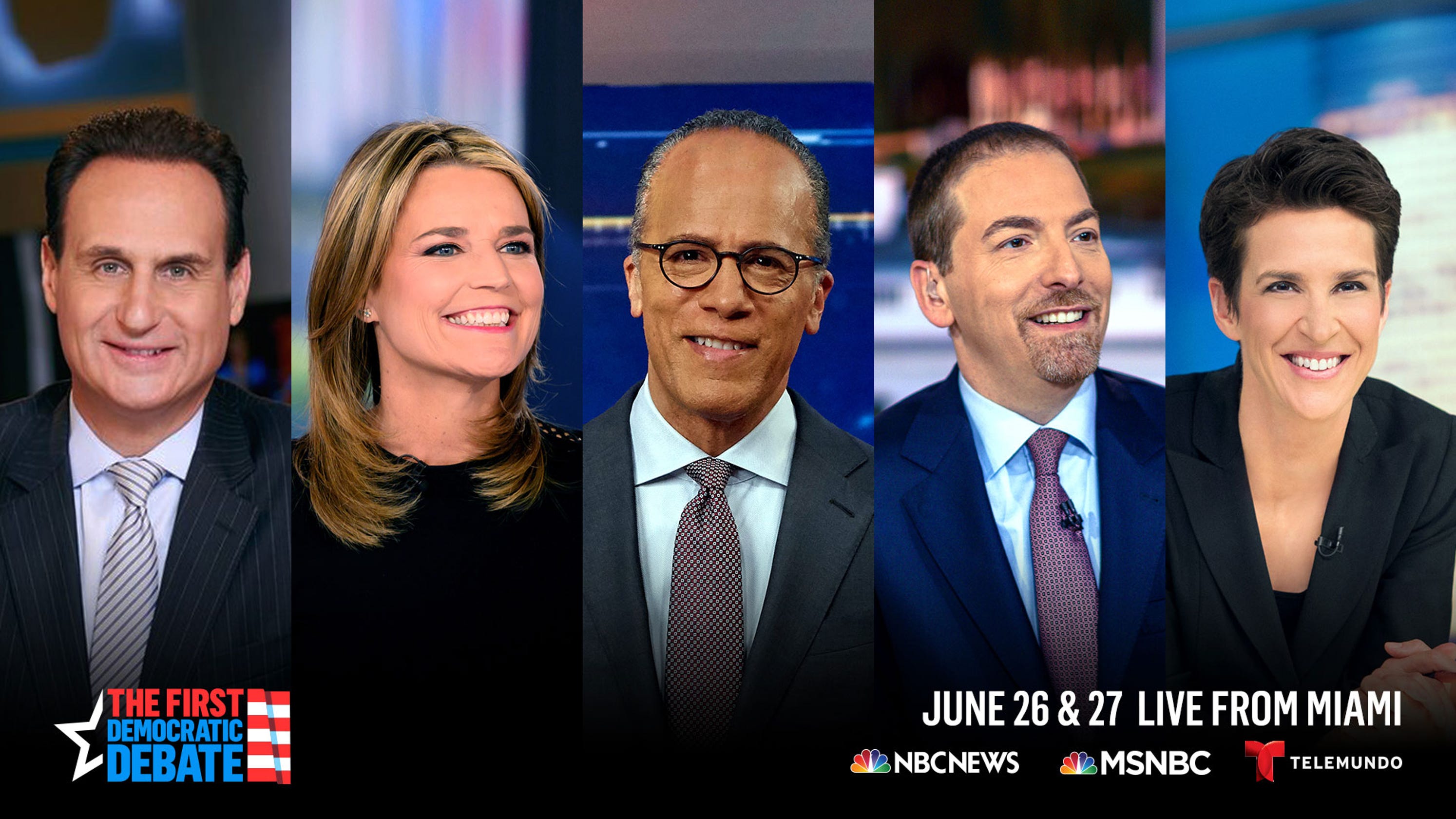
The candidates faced questions from the moderators that were loaded with questionable presumptions and bias (truthout.org; July 29, 2019; date accessed Aug. 7, 2019).  For example, during round one Lester Holt asked the candidates about health care.  It mattered little to him why the United States has the highest medical spending or the how private insurance plays a part in it.  No, he asked both groups of candidates if the supported a "government-run" (rev.com; June 26, 2019; date accessed Aug. 7, 2019)--an inaccurate term forced into the national discourse by the insurance industry.  The question quickly devolved into whether Americans can keep their "private insurance," instead of how to fix a broken system (truthout.org; July 29, 2019) that will cost $36 trillion over the next ten years (thenation.com; July 31, 2018; date accessed Aug. 7, 2019) and leave 30 million people uninsured (truthout.org; July 29, 2019).

Image result for presidential debate 2019: the moderators
Round two debate moderators
nypost.com

Many of the questions in both debates began with the assumption that being a progressive will hurt whoever faces the president in November 2020.  Let us dissect this statement: This infers that some of the bolder policies put forward by Senator Elizabeth Warren--for example--would somehow handicap her if she becomes the Democratic party standard bearer.  Rubbish, according to Senator Warren.  Blogger absolutely loved her response to Washington state Governor Jay Inslee when he tried to make the case for a more moderate agenda: "Go big or go home."  You do not win elections on "I don't know," "We'll see," "Maybe," or "Ooh that sounds like a really uncomfortable sex position" (Blogger threw that one in to see if you were paying attention).

Image result for presidential debate 2019
VPOTUS and Senator Kamal Harris (D-CA)
time.com

 The coverage itself took on the aura of sports event, complete with a pre-game show and countdown clock.  CNN reportedly charged advertisers $30,000 for a 30-second spot (variety.com; July 24, 2019; date accessed Aug. 6, 2019).  True confessions: Blogger considers debates a sports event.  Regardless, this is the sorry state of contemporary political coverage: Thoughtful questions replaced by memorable "repayable moments" (truthout.org; July 29, 2019) shown on cable news for a few cycles (Ibid).  Unfortunately, superficiality has always been the norm.  The only difference between then and now is platform.

During the Nixon-Kennedy debate in 1960--the first televised debate--then Vice President Richard Nixon was asked a quote from late President Dwight Eisenhower, during a press conference a month prior.  VPOTUS Nixon, who campaigned on his experience, was asked to give an example of idea adopted by President Eisenhower.  President Eisenhower responded he could not think of any straight away but give him a week.  That immediately became a Kennedy talking point.  In 2004, the (in)famous Dean Scream came in response to a question about raising taxes.  Still pretty memorable.  Yours Truly can go on but YouTube has an excellent archive of "memorable" debate performances.

 The point is this is what these debates have become, performance pieces.  First, a candidate has to shill for a place on the stage.  Yours Truly would like to believe that the Democratic National Committee wanted to make the debates a little more inclusive but in doing so, reduced the candidates to shallow spokes people.  The lack of substantive question in service to creating memorable repayable moments further reduce the forums into shouting matches worthy of reality shows.  Unfortunately, this is the state of contemporary elections. 


Tuesday, August 6, 2019

We Need To Have A Conversation


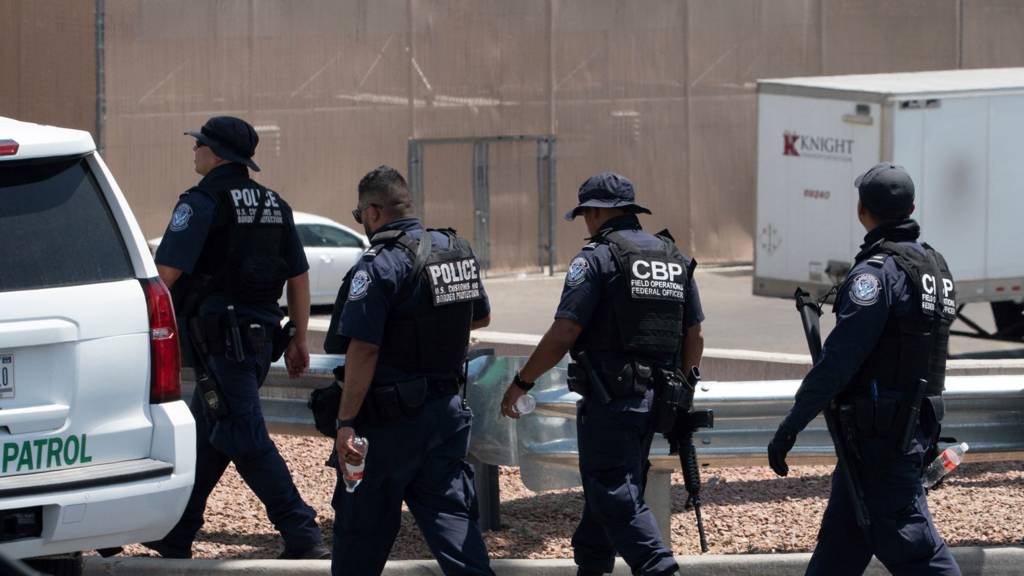
Image result for Aftermath of Mass Shootings: police
Tactical officers moving in
El Paso, Texas
bbc.com

Hello Everyone:

We live in an increasingly dangerous world.  It seems that even the most mundane daily tasks--going to the store, to school, your house of worship, and so on--are an exercise in fear.  Do you dare to leave your house, knowing that you might be a mass shooting victim or do you stay under the covers with the lights off, door bolted, and drapes drawn.  Thanks to the proliferation of apps like Instacart, it is conceivable that you can stay home and have everything you need delivered to your house.  Really, is that how you want to live your life?  Sure you can install a state of the art security system that allows you to watch whoever comes to your door but at some point you will have to leave the house.  Another thing to consider is that a clever hacker can get into your security system.  Just thought Yours Truly would throw that out.  Regardless of who or what you think the causes of the mass shootings are, one thing we can agree on is that they have destroyed are sense of safety in public spaces.  How do we regain are sense of safety?

Image result for gilroy garlic festival
Reno family at the Gilroy Garlic Festival before the shooting
Gilroy, California
ktnv.com

The Gilroy Garlic Festival, a block party (thetrace.org; Aug. 3, 2019; date accessed Aug. 6, 2019), a Walmart in El Paso, Texas, the Oregon Historic District in Dayton, Ohio (Ibid; Aug. 4, 2019) on a Saturday night.  In the past two weeks, each of these places, once the sites of communal life in a nation that exalts the freedom to gather, even or in spite of our fractious times, have become the sites of tragedy.  In an instant, these places have become the backdrops of unrelenting horror and fear against which, 110 people were shot and 33 died of their injuries (citylab.com; Aug. 5, 2019; date accessed Aug.. 6, 2019).

In 2019, the greatest danger to American public space is mass shootings, according to Yale sociologist Vida Bajc, who studies public space and security (Ibid).  The common thread in each of these shootings is our basic mechanisms of communal life--eating, socializing, shopping, partying--was instantly gave way to blood, death, and panic, requiring the response of tactical units.

In the wake of the four attacks--however difficult to prevent, unpredictable, yet so becoming so commonplace in a country that cannot seem to agree on gun control--law enforcement and public officials have been force to reconsider how people gather.  In these case, security takes precedence over other considerations.  The traumatic nature of these shootings distort the way we engage with the public sphere.  In an interview that originally appeared in thetrace.org (Aug. 3, 2019) and reprinted (in edited form) in citylab.com (Aug. 5, 2019), Vida Bajc spoke to Alex Yablon about the way the shootings can engender security crackdowns on public space and the implications for personal well-being and democracy as a whole.

Image result for El Paso Walmart
El Paso, Texas Walmart
ktsm.com

AY: What does the public get out of public space, and what do they when it is under attack?

VB: Outdoor public spaces in particular crucial to human well-being...It adds to the feeling of well-being and physical health.  Public space also allows people to freely interact across class boundaries--.... How do you learn to interact with other people in public? By doing it over and over.

Especially when shooting take place at community events or in the heart of a neighborhood, it's an invasion of this sense of home.

...Shootings also steal from people the sense that they inhabit a place, that it's their space.

Image result for oregon district dayton ohio
Oregon Historic District
Dayton, Ohio
planning.org

AY: And what do mass shootings do to the way authorities charged with keeping public space safe approach that responsibility?

VB: Every such instance of disruption is studied.  With the garlic festival, someone cut through a fence.  There was a breach of security.... If something similar happens again, there will be a huge outcry.  But of course you can't prevent everything....

When you have someone who unleashes anger on the public by shooting whoever happens to come in front of a gun, that speeds up the drive to perfect control over public space.

Increasingly, what we see are built space that are designed or restructured to be surveillance-friendly.  They're more directly managed by central, unelected authorities like the police.  The question becomes how will surveillance practice--CCTV [...], drones, constant police presence--affect interpersonal interaction in public spaces?

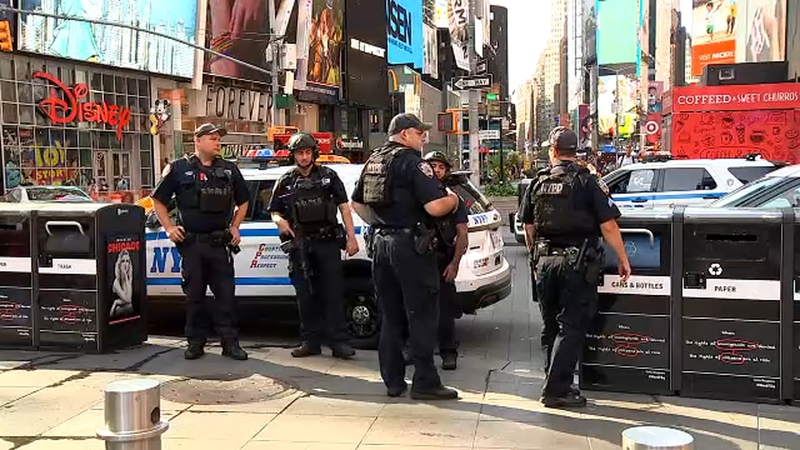
Image result for shooting in brooklyn
Increased police presence following a weekend shooting
Brooklyn, New York
abc7ny.com

AY: What does this mean for democracy?

VB: Our democratic values are being by our expectation that large events can be disrupted.  What kind of society are we becoming without spontaneous social interaction and bonding with strangers?  Without democratic access to space?  Security doesn't lend itself to these values?

....In other countries, or in immigrants communities, it's common for house parties and other informal gatherings to spill out into the street.  There's a very different notion of public order and public space, even though people everywhere argue and get into fights with strangers at big gatherings.  But in American, that happens less because you don't know who might be carrying a gun.

Image result for the right to bear arms
The Second Amendment
edu.glogster.edu


AY: How does American gun culture specifically put these pressures on public life?

VB: It's a serious paradox: The right to bear arms is at its heart about a lack of trust in those same institutions that we demand protect us.  The presence of guns necessitates exactly what people who carry gun say they want to be free from: state interference and control.

Because of all these shootings, the state claims the right to step in and multiply itself, expand its control  It starts training more police, buying more surveillance cameras, flying more drones over cities.... Guns leads us to invest money in things that don't actually contribute to our collective or individual well-being.

....Attempts to reason are interpreted as an infringement on the freedom to protect oneself.  People feel very strongly about this.  It's a particularly American situation.

AY: In the past week, we've seen mass shootings strike public spaces in states with strict gun control, like New York and California, and states that encourage concealed carry, likes Texas and Ohio.  We saw swift responses by armed police.  But nothing seemed to deter these shooters, or prevent them from quickly killing or wounding dozens of people before they were stopped.

VB: Lots of people will have doubts about attending public events or going out at night when we see there's not really any way to be sure you'll safe be from a shooting.  There's no way to protect public or private space so that these kinds of shootings will never take place.... 

I don't see any obvious way out, really--the direction that things going now is more hesitant to participate in public events.  We're losing public space who will walk in and shoot.  That increases the pressure to privatize or militarize every public setting.

American society is flooded with weapons.  We need to have a conversation about the militarization of our society.  It's a social bind out of which there isn't an easy solution.  It would need to be a very rdical intervention to solve this problem.

Monday, August 5, 2019

Beautiful City


Hello Everyone:

It is a very sad Monday.  Once again, the United States is reeling from back-to-back mass shootings in El Paso, Texas and Dayton, Ohio.  Enough already, do something about it.  It has gotten to the point where just walking out of the house   The president's response to the deaths of 31 people was to blame video games and mental illness.  He attempted to tie background checks to immigration reforms.  Essentially, everything else but his own politicization of divisive language and actions.  Here is a thought, first, if you are not the shooters' psychiatrists, do not feel free to make a diagnosis.  Second, "Call of Duty" does not cause radicalization.  The majority of the white supremacists have been simmering for a long time.  They are not mentally ill or play too many video games.  There is no one cause or one solution.  Only thing is certain, enough is enough.

Image result for most beautiful cities in america
10 most beautiful cities in the United States
wanderu.com
Do attractive cities have a real advantage over less attractive cities?  Economists call it a beauty premium (nytimes.com; Apr. 6, 2006; date accessed Aug. 5, 2019), "better-looking people tend to earn more money and are more successful at the career" (citylab.com; May 15, 2019; date accessed Aug. 5, 2019).  What about cities?  Do some cities benefit from the beauty premium?  The short answer is yes; we know this because a new study published by urban economists suggests that this is true.

Beautiful city: Leisure amenities and urban growth (onlinelibrary.wiley.com; Apr. 1, 2019; date accessed Aug. 5, 2019), by Gerald A. Carlino of the Federal Reserve Bank in Philadelphia and Albert Saiz of the Massachusetts Institute of Technology, studied the connection between a city's beauty and key growth indicators.  This differs from previous studies, which focused on the establishing the connection between economic and population growth and amenities (e.g. museums, galleries, parks, boutiques).  This study takes a deeper look at effect of how beautiful a city is.

The researchers' used a unique methodology to gauge a city's level attractiveness: "...through tourist visits and photos of picturesque location.  The photo data comes from Panoramio, a now-discontinued photo-sharing app embedded in Google Maps that geotagged, aggregated, and curated photos of scenic places around the world" (citylab.com; May 15, 2019).  Tourism information was courtesy of the travel consultancy D.K. Shifflet & Associates.

Image result for Beautiful cities: America
Chicago, Illinois
magical.planet.com

The study used its own measure of urban aesthetic to more established measures of urban amenities: parks, historic places, proximity to coastlines, scenic landscapes, tourism, and more.  The researchers at the connections between beautiful places, key indicators of urban economic growth, and gentrification in and around the urban center from 1990 to 2010.

The study found significant evidence of the beauty premium for cities and neighborhoods.  Richard Florida writes, "A city with twice as many picturesque location as another city saw 10 percent growth or greater in population and jobs from 1990 to 2010" (citylab.com; May 15, 2019).  Here are the numbers, "A city with twice as many picturesque locations as another city saw 10 percent growth or greater in population and jobs from 1990 to 2010" (Ibid)  There is even monetary incentive: the connection between attractive cities with lower taxes is an indicator of overall urban population growth.  Further, attractive cities disproportionately draw a greater share of college graduates.  "Cities in the top 25 percent of picturesqueness saw nearly 3 percent higher growth in the number of the college grad than those in the bottom 25 percent" (Ibid).

Image result for Beautiful cities: America
Los Angeles, California
onthegotours.com

With beauty, comes a price.  That price is greater housing appreciation.  "Housing values were 16 percent higher in the top quartile of picturesque cities than the bottom, according to the study" (Ibid).  The beauty premium affected every category, even more than tourist visits and amenities.

The study also found that a city's attractiveness had no impact on its size.  Small and medium-sized with a lot of parks, scenic landscapes, historic places, good weather are perceived as beautiful as well

Image result for most beautiful neighborhoods in america
Savannah, Georgia Historic District
magical.planet.com

Metropolitan areas are not the only places that benefit from the urban beauty premium, the specific neighborhoods within them also share in the premium.  A number of studies have documented "the back-to-the-city movement of younger, more educated, and more affluent people to the urban center" (Ibid).  The numerous studies typically measured the urban migration into neighborhoods close to the Central Business District, the downtown commercial of a city.  This is where gentrification frequently takes place, in nearby warehouse, factory, and logistics districts, think New York's SoHo, Tribeca, and most recent Chelsea and the Meatpacking District.

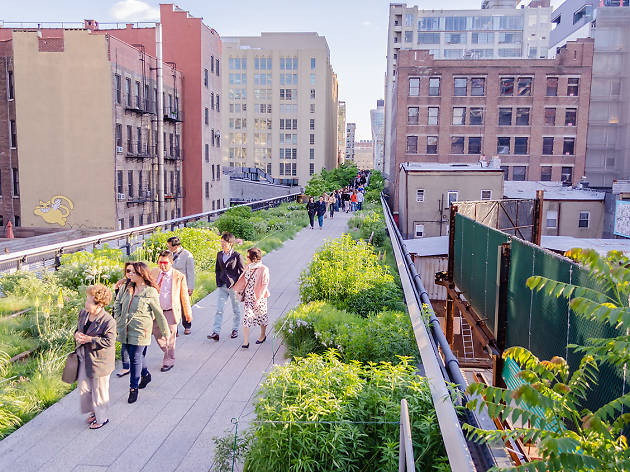
Image result for the high line
The High Line
New York City, New York
timeout.com
The researchers identified a new type of neighborhood that draws newcomers: the Central Recreational District, defined as "the prevalence of parks, historic places, landmarks, tourist destinations" (Ibid)--i.e Instangrammable sites.  Think the High Line (thehighline.org; date accessed Aug. 5, 2019) in New York City.  The once blighted former elevated railroad tracks have been transformed into one of the most highly desirable areas to live and recreate, as well as one of the most visited and photographed.  The CRDs, not the CBDs, are the catalysts for the back-to-the-city movements, as more affluent and educated people migrate toward a city center's abundant amenities and beauty.  Gerald Carlino and Albert Saiz wrote,

Despite worse initial economic conditions, CRDs managed to grow faster than other comparable neighborhoods,... (citylab.com; May 15, 2019).

Housing costs, incomes, and education grew relatively faster in beautiful neighborhoods.  The researchers continue:

Again, you can see this in the luxury condo tower that have sprung up along the High Line with their higher price tags and affluent residents,.... Distance to CDB was most irrelevant to the economic and demographic evolution of urban neighborhoods in the U.S., once we control for access to lifestyle amenities.  While the American central city did not come back in the 1990s, the beautiful city within flourished... (Ibid)

Image result for most beautiful neighborhoods in america: baltimore
Baltimore, Maryland
baltimore.org

Beautiful cities and neighborhoods do not just naturally.  They are creatures of sound public policy and investment.  Of course, some places have more natural beauty than others, for example of scenic coastlines or historic places.  Cities can and do make themselves more attractive as a way to draw more educated and affluent people by investing wisely in parks, protecting historic landmarks and spaces.  This is a modern phenomena.  Richard Florida explains, "Many of America's most striking landmarks--its great parks, museums, and architecturally striking public buildings--are products of the City Beautiful movement [nypap.org; date accessed Aug. 5, 2019] and New Deal spending" (citylab.com; May 15, 2019).

The point is "Urban beauty is a powerful tool for economic growth and urban resurgence, but with comes gentrification and displacement" (Ibid).  As Messrs. Carlino and Saiz put it,

Rents, incomes, and education attainment increased faster in urban beautiful neighborhoods but at the cost of minority displacement (Ibid).

Does this mean that cities should allow amenities like cultural institutions, historic places and spaces to deteriorate in an effort to stave off gentrification?  No, that would be foolish.  However, urban policy makers have yet to assess the full cost and benefits of urban beautification.  One approach is requiring developers of new luxury residences adjacent to publicly beloved amenities to pay more taxes, set aside affordable housing units, or employ local residents in their projects.  All plausible suggestions.  Other plausible suggestions include "...increased revenues from beautification projects to affordable housing, workforce development, and the reduction of concentrated poverty" (Ibid).

One quick point to mention in closing, Beautiful city: Leisure amenities and urban growth noted the obvious, concentrated poverty is bad for tourists' perception of a city's beauty.  Gerald Carlino and Albert Saiz optimistically write,

...points to an important motivation for poverty alleviation: By reducing inequality, cities become attractive for everyone--including the rich (Ibid)

Inclusion is beautiful