Tuesday, June 11, 2019

The Annual List


Image result for 2019 list of America's 11 Most Endangered Historic Places
Announcement
savingplaces.org
   
Hello Everyone:

It is that time of the year.  Time for the National Trust for Historic Preservation's (savingplaces.org) 32nd annual list of America's 11 Most Endangered Historic Places.  The annual list highlights a diverse group of examples of the nation's heritage that are in danger of damage and irreparable damage from inappropriate development, climate change, to neglect and disuse.  One of the best things about this annual list is that it highlights the places that are usually not on any tourist map but nevertheless, considered important to creating a more inclusive American history.  Please take a look at these sites and if you would like help, go to savingplaces.org and click on the link America's 11 Most Endangered Historic Places to find out more.

Image result for 2019 list of America's 11 Most Endangered Historic Places
Tenth Street Historic District
Dallas, Texas
savingplaces.org

Tenth Street Historic District
Dallas, Texas

Tenth Street was originally settled by former enslaved people, following the Civil War.  The Historic District includes an assemblage of buildings dating from the late 19th to early 20th century.  In 2010, there was a change to a local ordinance that allowed the city to receive demolition permits for houses less than 3,000 square feet, regardless of Landmark Commission rulings, which is substantially raising the rate of demolition.  Currently, at least 70 out of the Historic District's 260 have been razed.

If you would like to show your support for the local preservation group's lawsuit filed against the City of Dallas, please go to support.savingplaces.org

Image result for 2019 list of America's 11 Most Endangered Historic Places
Nashville's Music Row
Nashville, Tennessee
wvlt.tv
Nashville's Music Row
Nashville, Tennessee

Do you love music?  If you love music, especially country, rhythm and blues you must head over to Nashville's Music Row.  Music Row is home to over 200 music-related businesses, something unique in the world.  Out of the original modest homes and large commercial buildings, emerged unparalleled canon of music spanning genres to the delight of fans for generations.

Despite its crucial role in the identity, economy, and culture of "Music City," Music Row is endanger of being consigned to the history books.  Since 2013, 50 buildings--most of which serve music-related functions--have been torn down to make room for new development.  With a new plan guiding Music Row's future, now is the time to act.  Go to support.savingplaces.org and take action.

Image result for 2019 list of America's 11 Most Endangered Historic Places: Hacienda Los Torres
Hacienda Los Torres
Lares, Puerto Rico
savingplaces.org

Hacienda Los Torres
Lares, Puerto Rico

Hacienda Los Torres was built in 1846 during the height of Puerto Rico's coffee industry by Jose Maria Torres.  The Hacienda is one of the last of the historic coffee plantation houses on the island and one of the oldest standing structures on the American territory.  It is also connected with the "Grito de Lares" revolt and the Spanish-American War.

Multiple hurricanes, including Hurricane Maria 2017, threaten Hacienda Los Torres.  Help support saving the Hacienda Los Torres by going to support.savingplaces.org now.


Image result for 2019 list of America's 11 Most Endangered Historic Places: Ancestral Places of Southeast Utah
Ancestral Places of Southeast Utah
savingplaces.org
    Ancestral Places of Southeast Utah

Archaeologists believe that the Ancestral Places of Southeast Utah is one of the United States' must culturally rich, albeit, unprotected landscapes made available to oil and gas extraction.  Over the past two years, the Bureau of Land Management dramatically increased leasing activity in the region, despite concerns by the affected tribes, the NTHP and their affiliated regional partners.  Send a letter now to the Department of Interior urging them to recognize the Ancestral Places'  cultural significance.

Image result for 2019 list of America's 11 Most Endangered Historic Places: James R. Thompson Center
James R. Thompson Center
Chicago, Illinois
savingplaces.org
  James R. Thompson Center
Chicago, Illinois

The James R. Thompson Center is Chicago's stellar example of grand-scale Postmodern architecture.  However, Governor J.B. Pritzker just signed legislation allowing the sale of the building within the next two years to make up a state budget gap.  Without any preservation protection, the Thompson Center could be taken down.  Add your name to a list of people demanding Governor Pritzker to mandate retention and reuse of the Thompson Center and it is sold at support.savingplaces.org


Image result for 2019 list of America's 11 Most Endangered Historic Places: Bismarck-Mandan Rail Bridge
Bismarck-Mandan Rail Bridge
Bismarck, North Dakota
curbed.com
Bismarck-Mandan Rail Bridge
Bismarck, North Dakota

Built in 1883, the Bismarck-Mandan Rail Bridge joins Bismarck and Mandan, North Dakota.  The Bridge was was the first rail bridge built across the upper Missouri River.  This iconic structure has been recognized as an International Site of Conscience for the role it played in opening the west up to white settlement--resulting in significant impacts to the Native American communities--but it has been singled out for demolition by the BNSF railway company.

The Coast Guard is working with BNSF and other groups under Section 106 of the National Historic Preservation Act.  The Coast Guard has proposed a conditional permit that would mandate BNSF to retain the Bridge until after an adjacent bridge is built, in order to have time to find a preservation solution.  Tell the Coast Guard not to raze the Bismarck-Mandan Rail Bridge at support.savingplaces.org.

Image result for 2019 list of America's 11 Most Endangered Historic Places: Industrial Trust Company
Industrial Trust Company Building
Providence, Rhode Island
savingplaces.org
 Industrial Trust Company Building
Providence, Rhode Island

"Able to leap tall buildings in a single bound.  Able to stop a speeding train.  It's a bird, it's a plane, it's"  Super preservationist.  Did you think Yours Truly was going to say Superman?  Seriously, the Industrial Trust Company--the so-called Superman Building--has been an iconic part of the Providence skyline since 1928 but is now under threat.  The threat is from deterioration and deferred maintenance. Although the building is located in an "Opportunity Zone" (an area eligible for the capital gains tax incentive program), there is no redevelopment plan for the Industrial Trust Company Building, at the moment.  Read more at support.savingplaces.org


Image result for 2019 list of America's 11 Most Endangered Historic Places: Excelsior Club
The Excelsior Club
Charlotte, North Carolina
charlotteobserver.com
  The Excelsior Club
Charlotte, North Carolina

An entry in the Green Book, the Excelsior Club was a premier African American club in the Southeast, playing host to Nat King Cole and Louis Armstrong during its day.  This lovely example of American Art Moderne is currently for sale for $1.5 million and is looking for an owner who will seriously invest in the property.  Any future owner would need to have a reuse plan and be willing to make a significant investment in the property to insure a solid future.  Read more at support.savingplaces.org.

Image result for 2019 list of America's 11 Most Endangered Historic Places: Tidal Basin
National Mall Tidal Basin
Washington D.C.
usatoday.com

National Mall Tidal Basin
Washington D.C.

Right now, our friends at the National Trust for Historic Preservation are in the middle of a three-year campaign to preserve the Tidal Basin.  This iconic landscape encompasses some to the United States' most iconic monuments--like the Jefferson Memorial seen in the picture on the left--and cherry blossoms (also left), a gift from Japan that bloom in the spring.  The NTHP estimates that this popular and most visited site national park needs as much as $500 million to upgrade and maintain it.  Read more and join the campaign at support.savingplaces.org.

Image result for 2019 list of America's 11 Most Endangered Historic Places: Willert Park Courts
Willert Park Courts
Buffalo, New York
preservationbuffaloniagara.org
Willert Park Courts
Buffalo, New York

Willert Park Courts is a unique example of early American Modernism with bas-reliefs of everyday life was the first New York state housing project built specifically for African Americans.  Right now, the site remains empty and open to the elements.  The Buffalo Municipal Housing Authority has suggested demolishing the property in order to build replacement housing development.

You can help save Willert Park Courts by asking the Buffalo Municipal Housing Authority to preserve redevelop the site instead of demolishing it at support.savingplaces.org.

Image result for 2019 list of America's 11 Most Endangered Historic Places: Mount Vernon Arsenal and Searcy Hospital
Mount Vernon Arsenal and Searcy Hospital
Mount Vernon, Alabama
wbhm.org
Mount Vernon Arsenal and Searcy Hospital
Mount Vernon, Alabama

The state of Alabama has been in the news a lot, for bad reasons.  Blogger knows, understatement of the decade.  Regardless, one place in Alabama that did make the news for good reasons is the Mount Vernon Arsenal and Searcy Hospital.  The arsenal was used by the Confederacy during the Civil War and held Geronimo and about 400 Apache prisoners of war during the late 19th-century.  The hospital was a segregated mental health facility after 1900 before closing in 2012.  Currently it is deteriorating and remains vacant

You can go to support.savingplaces.org. and tell the Alabama Department of Mental Health that you support the economic revitalization and preservation of the Mount Vernon Arsenal and and Searcy Hospital. 

If you want more information on these an other sites of American history, you can follow the National Trust for Historic Preservation on the social media, using the hashtag #11Most.   

Monday, June 10, 2019

Can Exposition Park Be A World Class Destination?


Image result for sunday in the park
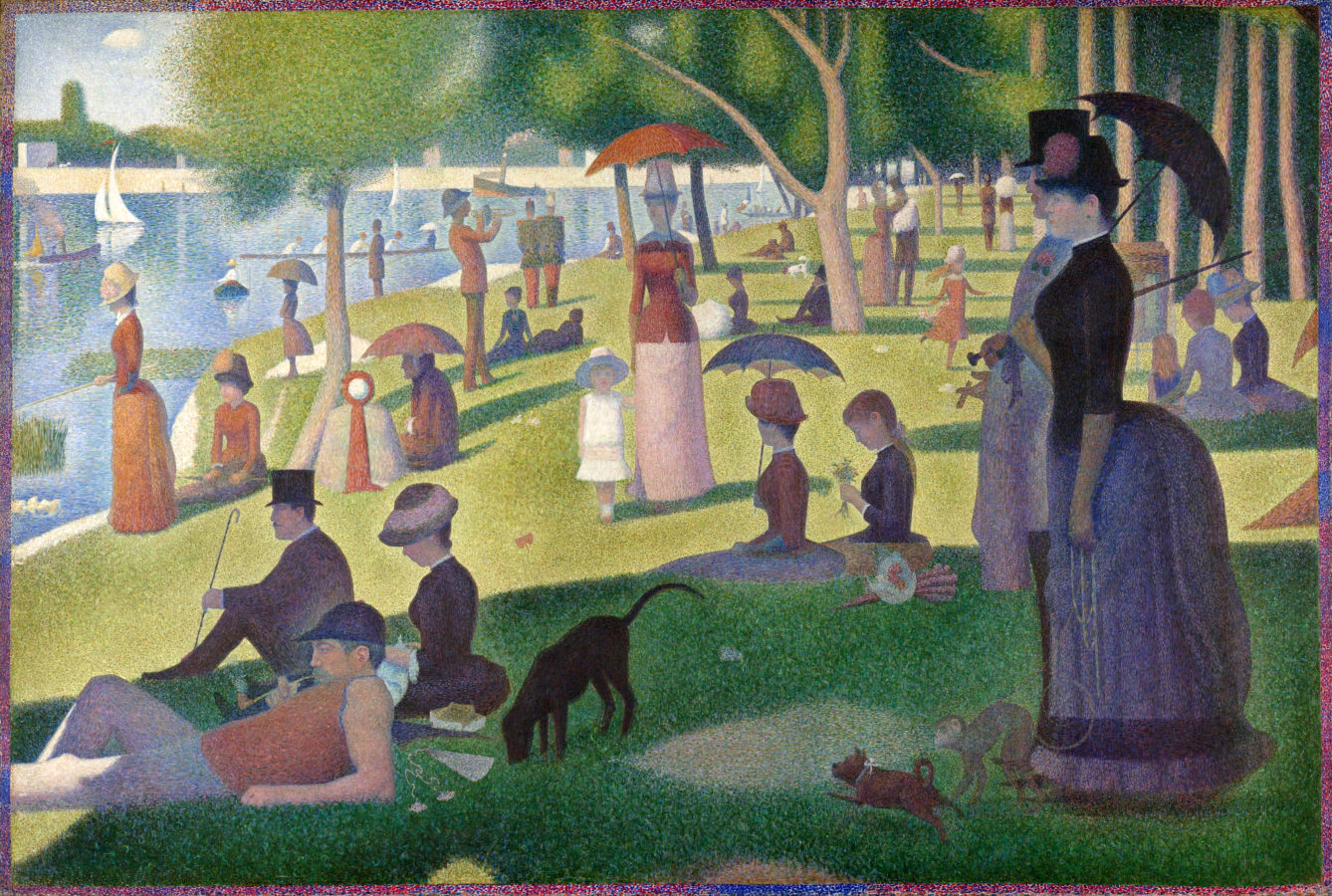
Dimanche dans La Grande Jatte (1884)
George Seurat
dailyartmagazine.com


Hello Everyone:

Welcome to a warm week on the Blog.  Yours Truly calls this post "The Escape Edition" because Blogger had to make a quick getaway from Blogger Mum.  Sorry about Wednesday's post, the combination of spotty WiFi and a migraine cut short the post.  However, Yours Truly will pick it up on Wednesday when the WiFi will be better and hopefully no migraine.  Since it is a warm sunny day, let us go to the park.

Sunday in the park with George.  George Lucas, that is.  The George Lucas Museum of Narrative Art is finally coming to Exposition Park in Los Angeles, California.  Exposition Park is a lovely green space that is home to the newly named United Airlines Field at the Memorial Coliseum, the California Science Center, and the family friendly Natural History Museum.  If you are into roses, you will love the Rose Garden.  However, chances are you did not exactly come to Expo Park to smell the roses.  Chances are you went there for the giant parking lots and left.  Barely, if at all, noticed the park.  You are not the only one.

Image result for Exposition Park: Los Angeles 1872
Entrance to Agricultural Park (Exposition Park)
Date unknown
kcet.org

Exposition Park was born in 1872 when the Southern District Agricultural Society bought a 160-tract near present-day Figueroa Street and Exposition Boulevard (kcet.org; date accessed June 10, 2019) to .  The Agricultural Society planned to use the tract as a kind of farmer's fairground.  The choice of location was a curious one but within the historical context, it made a sensible site for local farmers to display their livestock and produce. (Ibid)

Agricultural Park was just beyond the fringes of Los Angeles' urban growth in 1872, the park's creators encourage new American landowners to take up farming and, by capitalizing on the growth of commercial agricultural, hosted exhibitions.  Agricultural Park was successful in promoting profitable uses of Southern California's land, but the fairground was not generating revenue and, in 1879, mortgage creditors foreclosed on the property. (Ibid).  In 1932 and 1984, Los Angeles hosted the Summer Olympics and will do so again in 2028.  Exposition Park is also home to the brand new Banc of California soccer stadium (latimes.com; Apr. 28, 2019; date accessed June 10, 2019), the resurgent California African American Museum, the Rose Garden, the Expo Center (home to youth sports programs), and the Dr. Theodore T. Alexander Science Center, an elementary school designed by Thom Mayne (Ibid; May 30, 2019)

Image result for Exposition Park
Exposition Park from Exposition Boulevard and Figueroa Street
Los Angeles, California
ust.ucla.edu

Sam Lubell writes, "But this remarkable compilation of attractions remains broken, chopped, blocked and dices--a slew of largely car-oriented puzzle pieces interspersed with more than half a dozen outsized parking lots, several faceless access roads and some ugly fences and patches of dirt" (Ibid).  Previous revitalization initiatives, including a 1993 master plan led by the California Science Center (Ibid), made some headway in the site's fractious condition, "adding green space (particularly along the park's west edge) and removing some surface parking.  But make no mistake: The car--and its In-N-Out culture is still king here" (Ibid)

Image result for Exposition Park
Exposition Park Rose Garden with Natural History Museum
tripsavvy.com

Billie Greer, the chair of the Master Plan Committee for the Exposition Park board of directors, told the Times,

It's sort of chaos right now,.... We have to remember that people should to come to the park, not just to go to a museum of a stadium.  But to exercise. To walk.  To sit. To dream a little bit and enjoy the outside .  We need some quiet places and some beautiful places" (Ibid).

Change is coming to Exposition Park.

Image result for Exposition Park
Rendering for new additions to Exposition Park
latimes.com
Amorphous officials has commissioned a new master plan coinciding with the most significant park additions in a long times: MAD Architects' Lucas Museum of Narrative Art (Ibid; Jan. 10, 2017); the Frederick Fisher and Partners' new wing ((Ibid; Oct. 18, 2017), that will become a new entrance facing the Lucas Museum; and ZGF's Samuel Oschin Air and Space  Center, the permanent home for the soon to be vertical Space Shuttle.  Another item worth noting is USC's ongoing $270 million renovation (Ibid; May 30, 2019).

Spurred on by the changes and the coming 2028 Olympics, the state funded Office of Exposition Park Management--with additional contributions from the park's member institution--hired Washington D.C.-based master planning specialist Torti Gallas + Partners and team of consultants to propose strategies for the park to act, well, more like a park.  Given the dubious state of some of Los Angeles' local parks, is the Office of Exposition Park Management sure they want the Park to act like a park?  Just thinking out loud.

Image result for Exposition Park
Los Angeles Swimming Stadium
Exposition Park
tripsavvy.com

Torti Gallas principal Neal Payton said, "the attention is on three pedestrian-focused elements meant to undo years of car-focused planning: Link the park to the city around it, connect the park's many pieces to one another, and encourage visitors and locals (South L.A. is, after all, one of the most park-poor areas in the country) to linger through more enticing and more plentiful pathways, plantings and visitor amenities" (Ibid).  Mr. Payton added,

Of course car will have a places,.... But they won't dominate everything else (Ibid).

Mr. Payton's firm is developing the park master plan and acknowledges that cars will always be part of the equation, self-driving or not.

Exposition Park, like most of L.A. public spaces, resemble fortifications, surrounded by noisy unattractive roads, with little or no connection to the surrounding area.  To fix this, Mr. Payton's firm suggested joining the park and the surrounding community with greener, more lovely edges shaded by trees, well-built promenades, accented with signage, benches, and bike racks (Ibid).  Torta Gallas also propose buildings eight new entrances for pedestrians and cars, improving about three more, all closely linked to the park's interior pathway (Ibid).  Neal Payton said,

We want to celebrate this as a great civic space,.... You should know that the minute you arrive (Ibid).

Image result for exposition park california science center
California Science Center
Exposition Park
californiasciencecenter.org

Connect the park pieces means putting together and sprucing up the walkable spaces between spaces between the buildings, creating education and recreational moments, adding pedestrian boulevard that could either merge or replace the existing roadways or runways of asphalt as Mr. Payton refers to them.  The runways would be repaved and filled with new landscaping, educational kiosks, and trees.  New promenades could incorporate an Olympic "Ring Walk" (conveniently placed) around the Coliseum, a "Museum Walk" along Figuroa Street leading to the Lucas Museum on the north side of the park, and a "Neighborhood Walk" along the southern portion of the park.

The point is encouraging people to linger in order to create a more better human experience--a place to read, daydream, eat your lunch--more green space from a community garden.  Of course, the expensive, 800 pound gorilla in the room question is where is there space for all of this because all the walks and green areas would require creating underground parking spaces or replacing the flat-top lots with parking structures.  Right now, Mr, Payton could not estimate how much all the changes would cost but "ideally three of Expo's lot would go underground, supplanted with parkland filled with native plants, walking areas, dog parks, sports fields and spaces for events" (Ibid).  The newly build visitor parking structure would remain; Mr. Payton added "its upper level would remain but the aesthetic character would be improved" (Ibid).  Mr. Payton envisions,

I see folks today--mother, father, kid, dog--promenading through the parking lot as if they were in a Parisian park,.... It show there's an aspiration to walk in a public setting.  We think that's a fundamental component of making it a great park (Ibid)

A quick exist from the parking lot would be replaced by exploration.  Picnicking would replace tailgate parties.

Image result for exposition park
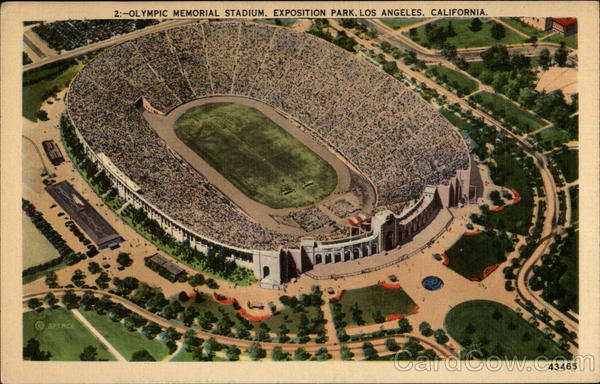
Olympic Memorial Stadium
Exposition Park
cardcow.com

Ana Lasso, the general manager of the Office of Exposition Park Management, told the Los Angeles Times,

Football only happens six to seven times a year here,.... This really needs to be a park, not a placeholder parking lot (Ibid).


Tortas Gallas is still a year away from completing the plan, but even if the scheme's fundamental remain intact, finding the funding and political capital to move the ball forward (slight pun intended) is up in the air.  Ms. Lasso is confident that the momentum for the grand project is there.  She told the Times, "Energy...has been steadily building with the arrival of Endeavor at the Science Center in 2012, USC's ownership of the Colisuem starting in 2013, the establishment of the Los Angeles Football Club in 2015, the opening of the Expo Line in 2016, and George Lucas' selection of Los Angeles as the site for his new museum in 2017" (Ibid).  She added, They've created a new paradigm, a new conversation about wanting to make Expo Park shine (Ibid)  The 2028 Olympics has certainly ignited that endeavor.

Currently, the project has not been submitted for public comment, therefore, there has been little criticism.  The question of funding is looming in the horizon and if civic officials really want to make this a world class destination, they will need to go further.  This means ambitious landscaping and parking plans, informal programming, and investing in the surrounding neighborhood.  This means not just a lot of good ideas but good implementation.  Yet, Ms. Lasso remains positive that things are aligning in the right direction.  Can Exposition Park do for Los Angeles what Millennium Park did for Chicago or Central Park does for New York City?  Stay tuned.

Wednesday, June 5, 2019

Blogger Candidate Forum: Fault Lines


Hello Everyone:
It is a lovely Wednesday afternoon and time for Blogger Candidate Forum.  The president's European roadshow continued today, this time it was off to Ireland and France awaits his arrival.  Never one to miss an opportunity to fire off a tweet or two or three, the president demonstrated his lack history when he tweeted that the Republic of Ireland was part of the United Kingdom.  No.  A wall separated Ireland and Northern Ireland was example of why walls work.  No.  The United States has the cleanest climate right now.  No.  In an interview with Piers Morgan, he doubled down on calling the Duchess of Sussex (and fellow L.A. woman) "nasty."  No doubt the British royal family and Blogger's beloved British cousins are breathing a huge sigh of relief.  D-Day ceremonies are on tap on the French coast.  Let us hope all goes well.  Moving on.

Today we are going to take a look at how the rural-urban divide became a political fault line.  The divide is not unique to American politics but the consequences run deep.  The divide is deep enough that it impacted the 2016 election and potentially will do the same in next year's presidential election.  To fully understand what this fault line is about and how it affects elections, let us take a closer look and see what is all about.

Image result for Share of voters who live in a precinct that is...: new york times
Source: 2016 precinct from Ryne Rohla
nytimes.com
 
Emily Badger writes, "it's true across many industrialized democracies that rural areas lean conservative while cities tend to be more liberal, a pattern partly rooted in the history or workers' parties rooted in the history that grew up where urban factories" (nytimes.com; May 23, 2019; date accessed June 5, 2019).

The urban-rural schism is extremely acute in the United States: extremely entrenched, very hostile [link not available], and quite lopsided.  How lopsided?   "Urban voters, and the party that has come to represent them, now routinely lose and power [link not available] even when they win more votes" (nytimes.com: May 23, 2019).  It sounds strange does it not?  How does a party routinely lose votes and become the minority party in Congress even when it wins more votes?


Democrats lay blame in the Senate, Electoral College [link unavailable], and gerrymandering for their losses.  Notice how they do not blame their own inability to connect with rural voters or just ignore them?  However, the problem is deeper than than that, according to Jonathan Rodden, a political scientist at Stanford University: "The American form of government is uniquely structured to exacerbate the urban-rural divide--and to translate it into enduring bias against the Democratic voters, clustered at the left of the accompanying chart" (nytimes.com: May 23, 2019).

The Senate [link not available] is the problem for Democrats because it gives disproportionately more strength to rural voters.  Mr. Rodden points out,

That's an obvious problem for the Democrats,... This other problem is a lot less obvious (nytimes.com: May 23, 2019).

Image result for Why Cities Lose: book
Jonathan Rodden's new book
amazon.com
In his new book, Why Cities Lose (amazon.com; date accessed June 5, 2019), Mr. Rodden describes the problem "as endemic, affecting Congress but also state legislatures; red states but blue ones, too" (nytimes.com: May 23, 2019).  As the Democratic Party is caught between it the progressive and moderate wing going into the next election cycle, his analysis suggests that "if Democrats move too far to the left, geography will punish them" (Ibid).  Absolutely and here is how.

In the United States, where a party's voters lives definitely matters.  The reason is the majority of representatives in the House are elected from "single-member districts where the candidate with the most votes wins, as opposed to a system of proportional representation, as some democracies have" (Ibid).

Democrats are typically concentrated in urban areas and Republicans are usually more diffused through suburban and rural areas.  The distribution of precincts in the previous presidential election cycle demonstrates that while many skew heavily Democratic, less and less tilt as far in the opposite direction.

The result is "Democrats have overwhelming power [link unavailable] to elect representative in a relatively small number of districts--whether for state house seats, the State Senate or Congress--while Republicans have at least enough to elect representatives in a larger number of districts" (nytimes.com: May 23, 2019).  In short, Republicans are more efficiently spread out in a system that rewards this distribution.

Image result for electoral map of pennsylvania
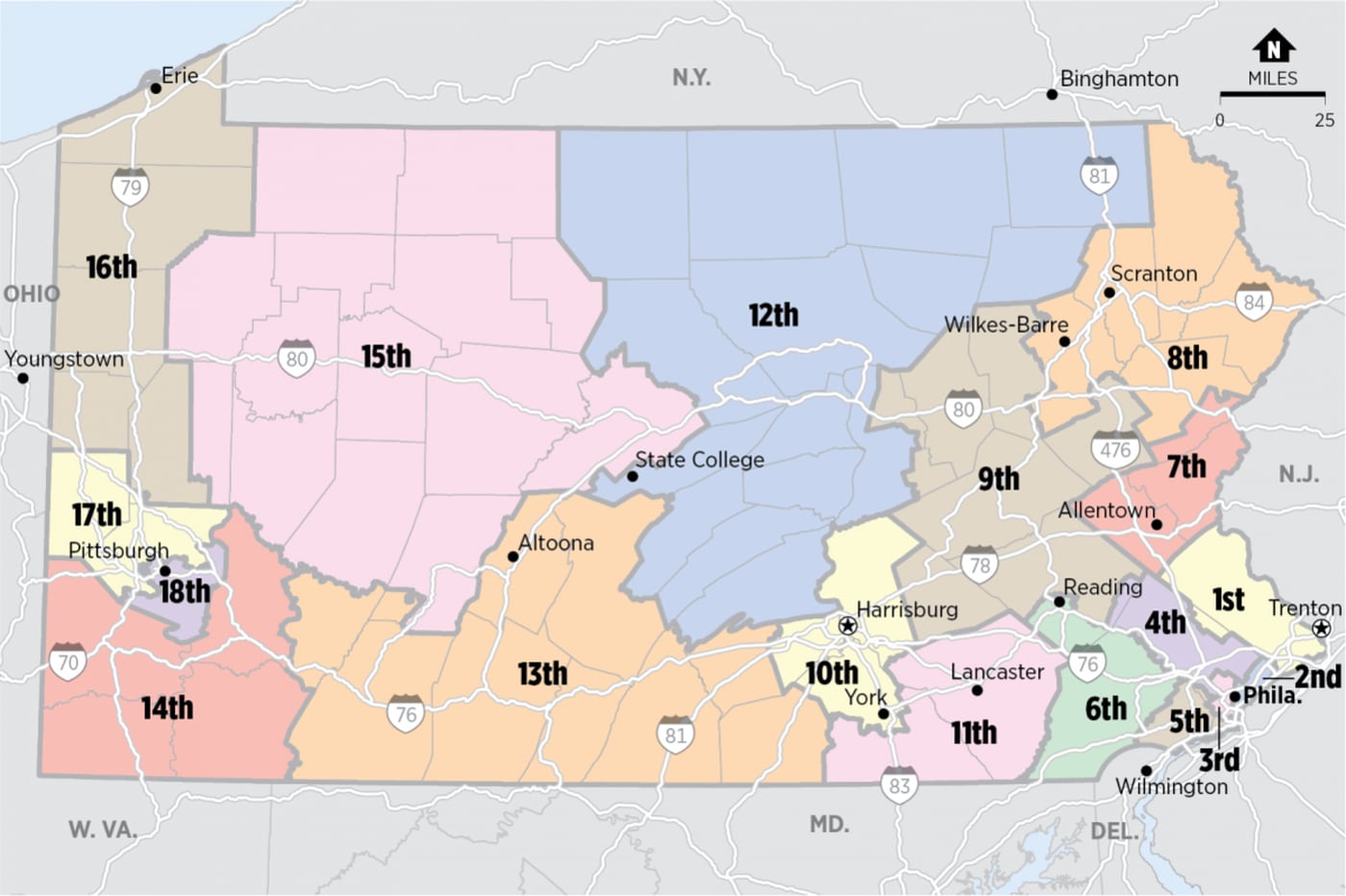
2018 Pennsylvania electoral map
inquirer.com

This explains why Republicans have controlled the Pennsylvania state legislature for nearly four decades, despite losing statewide elections about half that period.  I also explains why Republicans are typically overrepresented in blue states like New York.  It also explains why former Secretary of State Hillary Clinton only won three out of the eight Minnesota congressional districts--"districts drawn by a panel of judges" (Ibid)--even though she won the state.

For comparison sake, in the majority of European democracies, geography does not impact voting results in the same manner.  Following along: lawmakers are chosen from larger districts, each with more than one representatives, giving a party proportional power.  If the X Party wins at least 50 percent of the votes, how the votes are distributed is not an issue.

However, Great Britain, Australia, and Canada shares the same majoritarian system as the United States, and the urban-rural is in evidence as well.  Mr. Rodden argues, "Underrepresentation of the left,..., is a feature of any democracy that draws winner-take-all districts atop a map where the left is concentrated in cities" (Ibid).

In the United States, the combination of winner-take-all districts superimposed on a map where the left in concentrated make the schism more potent.  That peculiar American institution of gerrymandering allows Republicans to magnify their advantage on the political map.  Democrats gerrymander as well but they do so in order to neutralize their disadvantage.

The inflexible American two-party system results in political differences that align with the urban-rural divide.  Thus, the urban party is the party of gay marriage and gun control while the rural party stands for stricter immigration and abortion restrictions.

Image result for newt gingrich
Former Speaker of the House Newt Gingrich
nationalreview.com
Emily Badger writes, "We keep adding more reasons to double down on geography as our central fault line, and to view our policy disagreements as conflicts between fundamentally different ways of living" (Ibid)

Recent history has clouded the consequences of all this for the Democratic Party, the majority party for most the postwar, until 1994 and the Gingrich Revolution.  The Democrats were briefly able to retake the House before losing it in 2011, then regaining in the last Midterm Election by winning seats on Republican-esque territory.  Jonathan Rodden correctly argue that the "Democrats need moderate 'blue dogs [link unavailable],... to overcome their geographic disadvantage" (Ibid).

"Historically, split-ticket voting has been asymmetrical" (Ibid).  Many districts that swung Republican in presidential elections have voted for moderate Democrats in congressional races.  The reverse is is rarely true.  Republicans have seldom flipped Democratic districts.  Mr. Rodden said,

They've not as a matter of survival needed to that,... Democrats need to do it even in a good year." (Ibid)

In the 2018 Midterms, Democrats squeaked out victories in those exact districts, suburbs that have a history of voting for moderate Republican candidates.

Be that as it may, split-ticket voting has become less common, as the major parties have more clearly defined their differences, and as local elections now have national implications. Both trends make it more challenging for individual Democratic candidates to divest themselves from the national party--i.e. low taxes and abortion right or Affordable Care Act and the Second Amendment.  Three red-state Democratic senators, Heidi Heitkemp, Clair McCaskill, and Joe Donnelly lost their Senate seats in this kind of environment.

Mr. Rodden said,

You have this great strategy available to you as a Republican: Just talk about A.O.C. all the time,.... Talk about Nancy Pelosi.  They say, 'This is what it means to have 'D' next to your name, you're signing up for that team.'  That makes it so hard to be a suburban Salt Lake City, suburban Oklahoma City Democrat. (Ibid)

This strategy might work in the short term but in the long term, voters will want to know what having an 'R' next to a candidate's name means.

He found that "The median congressional district in America looks ideologically more Republican...." (Ibid).  Therefore, Democrats have find a way to win in those districts, even as the progressive wing of the party is on the rise and lobbying for control of the message.

Therefore, if the Democrats hold on to the suburbs they flipped in the Midterms-a possibility as suburbia becomes more diverse and as college-educated whites gravitate towards Democrats (link unavailable)--Republicans could find themselves concentrated in rural area just as Democrats have been confined to urban areas.

If this is the case, a scenario where Republicans tightly pack their votes in rural areas and the median suburban becomes more blue, the urban party could actually benefit from geographic division.  However, there is always the Senate.


Tuesday, June 4, 2019

The Master


Hello Everyone:

It is a lovely Tuesday afternoon and Day two of #TrumpVisitUK and still no milkshake in sight.  Although Baby Trump made his debut.  The 75th D-Day Commemoration Ceremony is coming and who knows what could happen.  Moving on.

Image result for i.m pei
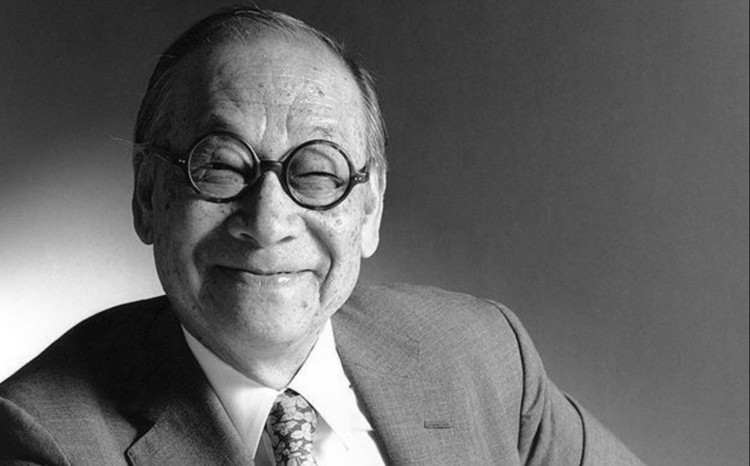
I.M. Pei
archdaily.com

On May 16, 2019, architect Ieoh Ming Pei passed away at the age of 102 years-old.  That fact alone is quite remarkable but not really when you stop and think how prolific his career was.  However, the real genius of I.M. Pei's career was how understated his modernism was.  Unlike more heroic architectural contemporaries: Philip Johnson, Frank Gehry, and the late Zaha Hadid, I.M. Pei's modernism was elegant in their geometry and the way they appeared to dissolve into the sky.  They were also some of the most infuriating structures because they were not that well engineered.  American writer John Updike made reference to the architect's most famous skyscraper in his 1980 story Gesturing.

Image result for john hancock tower
200 Clarendon (John Hancock Tower, 1976)
Boston, Massachusetts
chicagotribune.com

In the story, the newly separated Richard Maple finds himself staring out of his Boston apartment with a view of amazing skyscraper.  John Updike described it,

The skyscraper, for years suspended in a famous state of incompletion, was a beautiful disaster,..., famous because it was a disaster (glass kept falling from it) and disastrous because it was beautiful...(newyorker.com; May 28, 2019; date accessed June 4, 2019).
I.M. Pei imagined that sheer glass glass cladding would,

...reflect the sky and the old low brick skyline of Boston "and would " melt into the sky.  Instead,..., the windows of mirroring glass kept falling to the street and were replace by ugly opacities of black plywood (Ibid).

Nevertheless, a sufficient amount of the reflective surface remained

to give an impression, through the wavery old window of this sudden apartment, of huge blueness, a of the sea that Richard awoke to each morning, in the now bone-deep morning chill of his unheated shack (Ibid).

Emblematic of Richard Maple's slowly dissolving soul.

Image result for john hancock tower
Close up of the John Hancock Tower
en.wikipedia.org

The John Hancock Tower was designed by Henry N. Cobb of the I.M. Pei and completed in  1976.  The Hancock, as it is commonly known, is the fulfillment of every Modernist's dream: Pure glass architecture (Ibid).  Like the fictitious skyscraper of John Updike's story, it too suffered from engineering failures.  The glass panes could not withstand Boston's high winds.  A further study concluded that the skyscraper had deeper structural integrity issues and could, under heavy winds, collapse.  Fortunately, vigilant attention and repair have kept the building in good shape and allow it to remain, according to Nikil Saval, "the single most beautiful object in one of the world's most tedious, stuffy cities--on one of Boston's handful of pleasant blue days, it reflects and multiplies the scudding clouds" (Ibid).

I.M. Pei was born in China on April 26, 1917 and passed away in New York. For over half a century, I.M. Pei received major commissions around the world and the United States, that have become integral to the character of our cities.  Although it was not always obvious how his work harmoniously worked with their host cities.  He was a modernist, who unlike his headline making contemporaries, designed the kind of buildings that were more modest in character.  The John Hancock Tower was one such building, you knew it but did not go out of your way to see it.

Image result for louvre pyramid
Louvre Pyramid, 1989
Paris, France
architectmagazine.com
 
The Louvre Pyramid, another one of I.M. Pei's best known works, was controversial when it was completed. Critics argued that it was completely out character with the stately museum.  It still does stick out like spike rising out of the courtyard but it has become a landmark.  Mr. Saval describes, "Glowing and light-filled, the pyramid is the paradoxical iconic work that has become inextricable from its surroundings; it is now impossible to imagine the museum's fronting plaza without it" (Ibid).

In short, I.M. Pei followed through the tradition of architectural modernism more thoroughly than other architects.  As a student at the Massachusetts Institute of Technology, he was inspired by Le Corbusier but resisted the Swiss-French architect's megalomaniac aspirations.  Instead, he was more of the professional, the kind that made "modernism feel conservative and traditional" (Ibid).

Image result for east wing of the national gallery of art
East Wing of the National Gallery of Art, 1978
Washington D.C.
nga.gov

The East Wing of the National Gallery of Art in Washington D.C. is good example of this approach.  The East Wing brings together "sharp, trapezoidal construction with monumental marble veneer" (Ibid).  This was a modern project that seamlessly integrated itself into the academic neo-classical design of the U.S. capital city.  "Emblematic of a figure who put up buildings everywhere that one doesn't know are his while at the same time, becoming a figure of significant international renown,..." (Ibid).   What was truly amazing was that I.M. Pei, who won every major prize and recognition available in the profession, was an Asian American practicing in a field that is notoriously hostile to women and people of color.  He told critic Paul Goldberger,

I worry that ideas and professional practice doe not intersect enough,.... Maybe my early training set me back.  Maybe it made me too much of a pragmatist (Ibid)

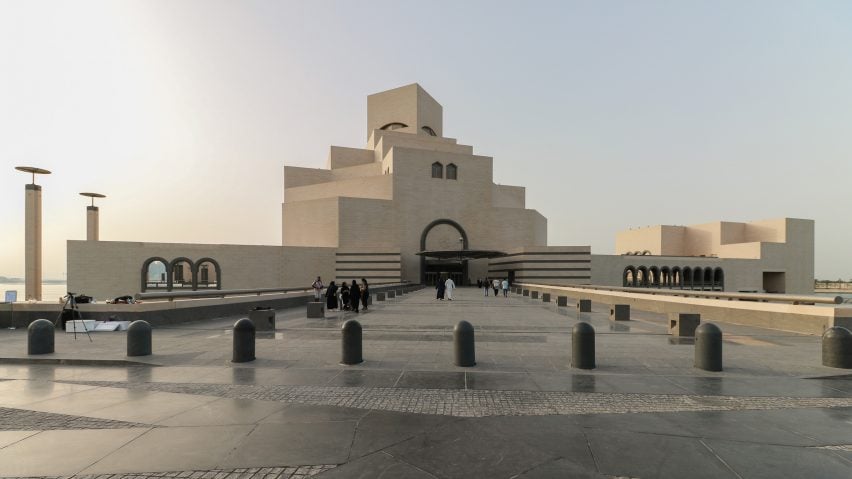
Image result for Museum of Islamic Art: Doha
Museum of Islamic Art, 2017
Doha, Qatar
dezeen.com

One byproduct of I.M. Pei's remarkably long career was that in one sense he captured the entire drift of the modern movement.  He worked throughout the postwar years into the first two decades of this millennium and was party to its achievements and disasters.  One of the elements that make I.M. Pei's iconic is the way they transition from the street.  If you turn your attention to the image of the left, the Museum of Islamic Art, what you see is this expanse of concrete leading up to the museum.  The concrete expanse serves as the transition from the bustling streets to the more serene rarefied museum environment.  In a way, it references the Islamic gardens that create a contemplative space.  In this way, the Museum of Islamic Art becomes a creature of its place rather than negating like more heroic projects tend to do.

Modern, yet classical.  Attention getting, yet modest.  The master I.M. Pei

Monday, June 3, 2019

What Will The Next 80 Years Bring?


Hello Everyone:

The annual June gloom has arrived on schedule.  Speaking of on schedule, the president's state visit to the United Kingdom managed to get off to the usual start, insulting tweets, protesters, and nary a milkshake in sight, yet.  Shall we move on?

Union Station
Los Angeles, California
Photograph: Blogger
Recently, Los Angeles' Union Station celebrated its 80th birthday.  Since 1939, Union Station has served as a port of entry to Los Angeles, welcoming visitors from all over the United States.  In recent years, the train station has become less of a central transit hub and more of a really cool place to hang out.  If civic planners have their way, Union Station will become a central hub in metropolitan Los Angeles' overall transit scheme.  Before Yours Truly plunges ahead, a word about the photographs: Blogger's human typist spent a morning taking pictures of Union Station and is happy to share them with you.

First, a little history. Union Station was designed by the father-son architect team John and Donald Parkinson with a creative blend of Spanish Colonial Mission and Art Deco, commonly referred to Mission Moderne.  Within a few years of opening, Union Station transformed into a bustling around the clock, seven-day-a-week with as many a 100 troop trains transporting thousands of soldiers and sailors through the station during World War II.  By the 1950s cars and airplanes overtook trains as the preferred means of transportation and train ridership dwindled.  In 1972, Union Station was designated a local Historic-Cultural Monument and placed on the National Register of Historic Places in 1980 (unionstationla.com; date accessed June 3, 2019).  Currently 36 million visitors pass through Union Station every year (latimes.com; May 21, 2019; date accessed June 3, 2019), slightly less than Washington D.C's famed Union Station.  However, unlike the well known stations in Denver and New York, L.A.'s Union Station has yet to become a central destination.

Reception area
Union Station

As of writing, civic officials are considering a myriad of proposals, however grand, to improve Union Station--heavily dependent on whether California's controversial high-speed rail line terminates in Downtown Los Angeles (Ibid; May 16, 2019).

One initiative in progress is Link Union Station.  Reporter Colleen Shalby writes that the $2.2 billion project aims to make the station "a hub connection Metro Rail's intercity subway and light rail lines to allow for a better long-term travel experience--and hopefully stem falling ridership" (Ibid; May 21, 2019).  This project has been fast tracked for completion before the 2028 Summer Olympic Games in Los Angeles.

Last year (link unavailable) the number of Metro passengers dropped to their lowest numbers in more than a decade as travel options, such as Uber and Lyft, have become more available (latimes.com; May 21, 2019).  Air and automobile travel continue to be less expensive alternatives to traditional rail, Union Station's raison d' etre.

Regardless, civic officials are confident that rail is going to play a larger part of Southern California's transportation future.  Jeanet Owens, Metro's senior executive, spoke to the Los Angeles Times.

Union Station ticket counter

We're in a rail renaissance right now,.... A couple years ago, Los Angeles didn't know that we'll be hosting the Super Bowl, the World Cup, and we'll be hosting the Olympics.  So we have a trifecta of events [Ibid; Mar. 6, 2019] occurring in Los Angeles. It really gives us an opportunity to get people where they need to go... transit options in lieu of driving a car (Ibid; May 21, 2019)

Metro anticipates about 200,000 rail trips a by 2040, double the current number (Ibid).

While the amorphous officials continue to argue the bold faced metamorphosis of Union Station, they are also considering small scale improvements targeted at creating a more community friendly place.

Since 2013 the agency has spent over $21 million on beautification and restoration projects.  Some of the improvements included cleaning the 268 leather chairs in the waiting area, installing a heat and air conditioning system (Ibid).  There are other improvement underway to the walkways and lighting, a redesign of the landscape to resemble the original plantings, and the install of a system to accommodate the visually impaired (Ibid).  Ken Pratt, the director the Union Station facility feels confident that the projects will be completed in the new few years.  He said,

Section of garden area

Not only to facilitate travelers and commuters, but to enhance Union Station as a destination,.... (Ibid)

A Street and sidewalk project, slated to begin in 2021, prioritizes pedestrians and cyclists; better connects Union Station with the community.  Ms. Shalby reports, "The sidewalk on the west side would be expanded, and at the front of the transit hub--where those headed to Olvera Street and the El Pueblo cultural monument typically walk through a parking lot area--a consolidated sidewalk would be added to take people directly across Alameda Street (Ibid).  Metro executive officer Jenna Hornstock told the Times, These are way to reactivate the station for people to experience it as a transit place and a destination (Ibid).

Union Station was completed in 1939 at the paltry (by today's standards) of $11 million, after an almost 20 year legal battle between Los Angeles and the railroads over who would pay for it and where it would be located.  By the time the Station threw open its doors to the first passengers, transcontinental air travel was more accessible and the automobile gained popularity.  Trains were not the only way to travel.  By the 1960s, Union Station was a virtual ghost town but that changed in the 1980s with the development of the Metrolink regional transportation and the addition of other services such as Greyhound coach service.

The people of Los Angeles, past, present, and future

The building's eclectic mix of Art Deco, Mission Revival, and Streamline Moderne architecture is a testament to Los Angeles' history but the interior bares no resemblance to Union Station's past.  Longtime member of the Chinese Historical Society Eugene Moy spoke to the Los Angeles Times, When you walk through, there's very little evidence of the brilliant community once there (Ibid).

Mr. Moy is referring to the fact that the site where Union Station now stands was once upon a time the site of many ethnic neighborhoods, including L.A.'s original Chinatown.  Mr. Moy added,

What many in our community who support historic preservation hope is for Metro to incorporate educational materials in the station itself that will help teach about the diversity of Los Angeles... (Ibid)

Union Station is the kind of space Blogger loves: dynamic.  The halls were filled with commuters coming and going everywhere in the Southern California region and beyond.  Blogger hopes that Union Station will become a central part of Los Angeles' transit future, not just a place to sit and people watch while waiting for a table at the restaurant in the station.  Blogger hopes it becomes a place like New York's Grand Central Station--i.e. the place to eat and shop while waiting for the train or not.  Let us see what the next 80 years bring.